Adil Najam
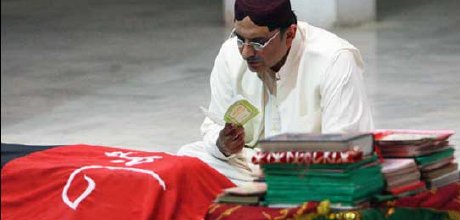
Benazir Bhutto was assassinated one year ago today, December 27.
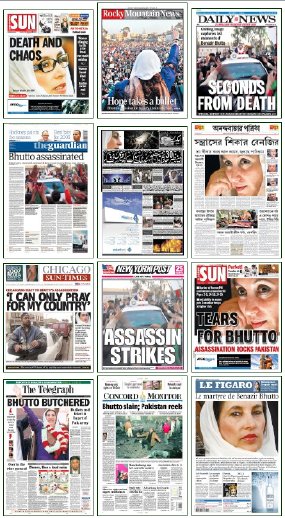
I remember being in utter shock when I first heard that news. In some ways I am still in shock. Indeed, as our wall of newspaper covers showed, the whole world was in shock. That shock, I believe, is also still alive.
And, yet, so much - so very much - has changed. An elected government holds power. Benazir Bhutto’s arch-nemesis Gen. Pervez Musharraf is no longer President of Pakistan. Her husband, Asif Ali Zardari, is. We still do not know who was behind her death, but speculation remains rife. The economy remains in nosedive. An energy crisis is upon us. One Chief Justice still awaits reinstatement. Another is embroiled in scandal. War talk with India on the East is the rage. Drones pound us on the West. And Pakistan continues to lose both territory and citizens to the extremists who continue to wage a war within Pakistan and on Pakistan. Most of all, anger and angst still define the social disposition.

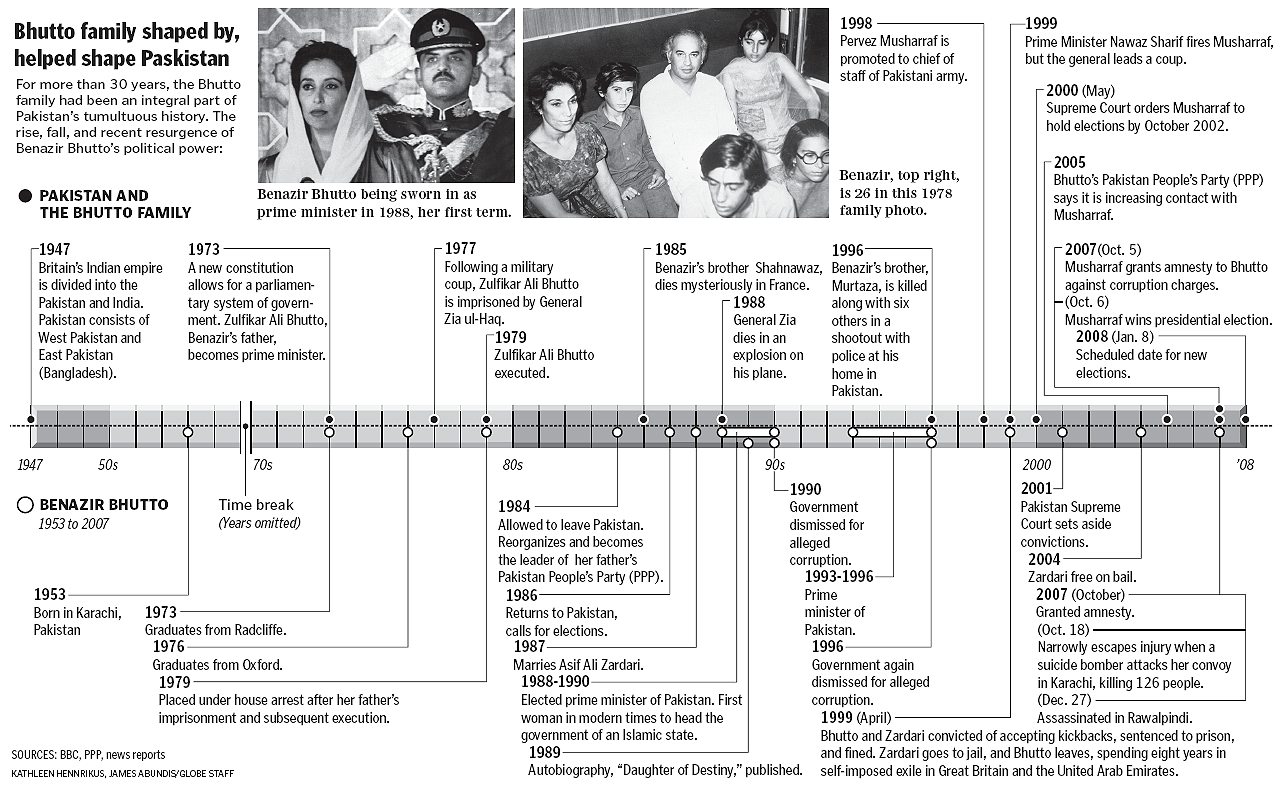
None of this is new. As a re-reading of our review of 2007 would show there is no evidence that 2008 was any more depressing than 2007 was. It just feels that way. Good things have happened (including elections) but so many bad things have piled on that it becomes difficult to remember what they were. Each new day brings new headlines of death, depression and despondency. And each headline chips away at the national psyche. The angst compounds within us. Gloom adds to gloom and the emergent analysis becomes ever more gloomy.
Speculative it surely is, but even if only for speculation’s sake, what if she had not been killed on that fateful day a year ago?
What if she had survived the attack? Would things have been different? Would the nature of the government she would have formed or run have been different from Mr. Zardari’s government? Would Gen. Musharraf’s fate have been different? Would Justice Iftikhar’s fate have been different? Would the pressure on Pakistan from abroad have been different? Would Pakistan’s response to extremists have been different? All of this, of course, assumes that she would have won the elections and assumed power had she lived. But, would even that have been so?
I do not know the answers to any of these. No one does. But a part of me would like to believe (for the sake of my own sanity) that things in Pakistan would, indeed, have been different - and better - if she had not been killed, even if nothing else had been any different from what it is today. Simply, because the blot of her assassination would have been one less stain for our collective soul to cleanse off. And she would still be there to give hope to at least a few!




Everything would have been the same, except no Zardari in power.
if she had not been killed, we would not have a holiday on 27th December and a Rs 10 coin :D
Yes the things would have been very different. But we must not loose hope, for this is all what we have along with the so many worst experiences in the past. We must learn from them and not to let it repeat once again.
I am and was a no supporter of PPP but I believe the democracy must be flourished. Had Muhtarma been here, the people would have decided her fate as per her actions. I believe she was a changed person after she came back home before her death and this was what which was un-acceptable to certain groups inside and outside Pakistan. I am an ordinary Pakistani. How can I know who are these people, but I can only speculate and curse such forces and prepare myself in my own little way.
We have to go way too far yet. But again we must not loose hope. I criticize all those who speak and write pessimistic views. I ask all of them; how many centuries were taken to let France achieve a perfect democracy? Pakistan had just been created only 61 years ago. So far we have done good if not great but we WILL do better tomorrow.
God Bless Pakistan
http://muddleheadedsblog.blogspot.com
The biggest difference is that we would not have Mr. Zardari to deal with and she would have kept the party and the country together. Best analysis is below from The News.
——–
ZARDARI GIVEN ENOUGH ROPE TO HANG HIMSELF
By Shaheen Sehbai
WASHINGTON: The one question that I am repeatedly asked by everyone, believing that I have been quite close to Asif Ali Zardari during his days of self-exile and forced expulsion from politics for many years, is how long he and his government will survive.
It is hard to answer this very loaded and complex question almost on a daily basis, especially when people think everyone who comes to Washington from Pakistan knows something more than they do. So I have decided to pen down my answer.
My considered opinion is that the present Zardari-led set-up will not last long as it has been structured on a wrong and distorted political premise as result of which the key players who have emerged as main power wielders were never in the picture, neither of Benazir Bhutto’s PPP, which actually got the votes and won the seats in the February 18 elections, nor anyone else. And these new players have failed to establish their political legitimacy and moral authority through their actions after coming to power.
These power players do not have any political ideology, they do not believe in the established principles of democracy and parliamentary process enshrined in the constitution and most important of all, they do not have a following among the masses, which is necessary for any political government worth its name.
What has happened is that in extraordinary turbulent circumstances, the Zardari Group of the PPP has taken over the party, out-manoeuvring the others through opportunities created by circumstances followed up cleverly by a web of deceit, chicanery and in some specific cases simple lies and cheating. Taking full advantage, Zardari formed a group of his cronies who had nothing to do with the PPP or its politics for years. Who could imagine that Rehman Malik, Farooq Naek, Babar Awan, Salman Farooqi, Husain Haqqani, Hussain Haroon, Dr Asim, Dr Soomro, Riaz Laljee, Siraj Shamsuddin, Zulfikar Mirza, Agha Siraj Durrani and many other smaller but tainted friends and associates of Mr Zardari would suddenly take over every important position and start calling the shots?
The above statements may seem bold, and to some, outrageous, but each one of these statements can be substantiated with specific and undeniable examples and proof. Of course Zardari and his cronies will deny this, screaming from every rooftop that he is genuine and represents the people’s will. But does, or will, anyone believe him?
To begin with, in the chaos that followed Benazir’s death, Asif Ali Zardari took over the party (PPP), the government, the parliament, the presidency and the judiciary. That was some achievement but the way he did it angered friends and foes alike. That is why he has been grappling with an enormous trust deficit, both domestically and abroad.
Has any prime minister who was elected unanimously or a president who secured a two-thirds majority ever looked so insecure that he had to repeatedly use questionable tactics to get his way through? Why is it that despite such strong support in parliament, he is working overtime every day to keep and tighten his hold on those state institutions not yet under his thumb — like the ISI, the Pakistan Army and some parts of the media?
His attempt to take over the ISI were foiled but he was asking for too much, too early. But given his nature, he will try again to control not just the ISI, but will also try to stuff the superior courts with Jiyala judges loyal to him and, if he gets the chance for which he will try his best, he will try to stuff the top Army hierarchy with his loyal generals.
This is where Mr Zardari will be stopped. That point may come as quickly as he tries to grab power. So in a way his own survival is in his own hands. But knowing Mr Zardari, I can predict he cannot stop himself. The unfortunate fact is that he cannot fathom what the judges movement has done to the body politic of the country and he cannot imagine what transformation the media has brought in the thinking of every man and woman in the country. He still lives in the ‘90s and cannot come out of that syndrome.
Step by step he has dismantled every pillar that Benazir Bhutto had painstakingly tried to build to strengthen politicians vis-a-vis the generals. In the many years that he was in New York, I never heard him discuss the Charter of Democracy or why the powers of the president should be cut. He would always discuss either some business deal or how he had outclassed other politicians in petty whimsical games. He never talked about any vision of a grand politically stable and strong Pakistan.
The illusion that he has become stronger than General Musharraf thus cannot make him a visionary overnight. As I know him, he is capable only to use these powers for his personal survival and security. But when an all-powerful Musharraf made mistakes, none of his powers could rescue him. Zardari has started by committing blunders.
He has survived so far because people expected a change and had to give him time. The safe window of opportunity that had opened up with the PPP victory was his safety valve, but for how long? He started when everyone wanted to give him time. Instead of building on that reservoir of sympathy, support and hope he has gone back on every promise he made publicly.
The 10 biggest blunders that will ultimately take him down can be listed as follows, though the full list may be too long:
1. Failure to show any enthusiasm to track down Benazir’s killers. The mysterious and tragic apathy shown by him towards her assassination is a sore in every heart. The top PPP leadership every evening sits in cosy drawing rooms and speaks in derisory language about what he is doing and how.
2. Failure to support the judiciary sacked by Musharraf and adopting a hostile attitude towards Justice Iftikhar Chaudhry. He lost the chance to build grand support.
3. Unnecessary and grossly counter-productive support shown for Justice Abdul Hameed Dogar.
4. Failure to make any move towards repealing the 17th Amendment and strengthening parliament. In fact, he has taken the system to a super-presidential model with a prime minister now cribbing regularly about his lack of powers.
5. Betraying his political coalition partners by refusing to follow the Charter of Democracy and cheating them with false promises.
6. Opening himself and his party to blackmail by smaller coalition parties to an extent that the entire government has become a hostage, thus unable to take any major initiative.
7. Boasting about his capacity to get economic and financial aid from the so-called friends of Pakistan, making repeated visits to world capitals and finally, opting for the most damaging and least acceptable option of going to the IMF, thus admitting failure.
8. Keeping petty political bickering alive in Punjab through a nonsensical presence of Governor Salman Taseer, a Musharraf appointee.
9. Turning into a widely disliked person in Pakistan within months by letting Musharraf go scot-free and adopting all his sins and drawbacks.
10. Humiliating and then forcing loyal PPP leaders into submission.
No one is yet ready to destabilise the current political set-up and Mr Zardari has been given a rope, in fact a longish rope, obviously to hang himself with. What worries me is that he has not proved himself competent to rise to the occasion, has shown no urge or capacity to grow into the huge shoes that he so suddenly finds himself in and somehow he does not envision the broader canvas of politics and lives with all the fears and insecurities of the era of the ‘90s and his days of captivity. Thus he is using the rope with intense energy to tie himself up in knots and form a noose around his neck.
If all the above answer the question how long will he last, the next universal question everybody asks is: how will he be removed as he has all the numbers?
This is an easy question to answer. By his acts Mr Zardari has not endeared himself to anyone in the 10 months of his rule. The initial honeymoon with the PML-N apart, now his own party is on the brink of imploding. December 27 will be a crucial date. How and on what issue the party cracks up is moot, but pressure from the opposition, a wink from the right quarters and one major blunder by Zardari is all it will take. It took an all-powerful Musharraf not even a few weeks to go down; Zardari is just learning the tricks to survive. After all the humiliation, what are BB loyalists like Aitzaz Ahsan doing in the PPP?
Things would have been quite different. I think the extremists would probably have been more determined to attack Pakistan if a woman had been in charge; they never seemed to like that idea.
But why single out the uneducated extremists, when our highly ‘educated’ elite holds only a slightly different opinion. They will always come up with the same shameful, pathetic excuse, that she stole money from Pakistan. But they never care to consider why someone whose sole intention is to commit financial fraud would repeatedly endanger her life by taking on military dictators and religious zealots.
Our elites have always been on the side of ‘feminists’ and supportive of ‘democracy,’ yet time and again they register their vote in favor of the opposing forces.
Was Benazir a great leader? I’m not sure; even historians will have a hard time on that analysis. However, she and her father showed genuine character during their times of adversity; just compare that with Nawaz who ran to his benefactors at the first opportunity, and Musharraf, Zia, and Ayub, who left in utter disgrace.
I hope the PPP survives the leadership crisis that it is facing right now. Pakistan needs a truly national political party that is not just ruled by the Chaudries of Punjab, the Sardars of Balochistan, or the thugs of Karachi.
I think things WOULD have been quite different.
First, people would have given her more of a chance because her reputation was not like Mr. Zardaris.
Second, I think she would have taken the Democracy pact with Nawaz Sharif more seriously.
Third, she would have held the PPP together better.
Fourth, she would have surrounded herself with better people than Zardari has (not people like Rahman Malik or Husain Haqqani or Salman Taseer).
But many of the bigger issues like the economy and terrorism would have still been there because they were before her as you say and they would have still been the big story that no one person could content with.
From the comment above, I assume that the commenter misspelled his/her name - an extra ‘z’ in the beginning and a missing ‘l’ at the end.
“Dushman marrey tay khushi na karee-aye, sajnaan vi marr jaana.”
I do not like Mr. Zardari at all and I think he is bad for Pakistan and bad for PPP but Benazir’s legacy and sacrifice cannot be ignored. My eyes fill up again just thinking of the price she paid with her life.
What” ifs” will not help us determine what would have been for Pakistan. You and I, we both know that things would have not been any different…That she was part of the same corrupt party and system and in a way by her silence, she would also have been party to all the injustices. You and I, we both know that in 1988 and then in 1993, she was incapable of serving our nation. By all her training and her postulations, she had not been able to take us where we as a great nation should have been able to go; she was a great orator but not a great leader. Please do not think that I am here to speak bad about someone who is not with us anymore. But I am objective and I come from a family who has worked directly with her family. I am a feminist and believe in the female power but I had to be really blind and deaf to follow her or her doctrine in any way.
Now, we have her husband ” Mr. 200 %” for a president. He is really milking a dead cow and really doing a good job at it. Other than that, he is totally incapable of understanding our
problems and our aspirations as a nation. If we have to mourn, we should mourn Fatima Jinnah, or other great female leaders. I would not mourn her as a leader but as a muslim, I would pray for her salvation for the hereafter.