Guest Post by A. H. Cemendtaur
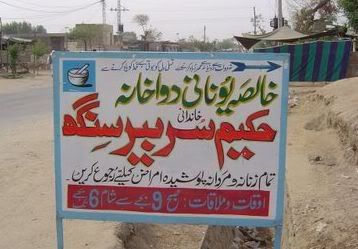 In the history of South Asia, 1947 was a blood-soaked year – hundreds of thousands got killed while millions were uprooted from their ancestral lands. Prior to 1947 Sikhs lived everywhere in North-Eastern area of what is today Pakistan. I hang my head in shame knowing that presently there is only a small number of Sikhs left there.
I have been a great fan of Sardars – more so after a community of them saved my life in Lusaka, the year was 1992. I got sick while traveling and sojourned at a Gurdwara (Singa Singa Mesquita). The family that took care of the temple took me to the hospital and fed me. I don’t recall their names, but I remember there was a young man who pursued a modeling career and wanted to go to the US.
Compared to followers of other faiths, a practicing Sikh must find it very hard to conceal his identity. And that is the reason I always wondered what professions Sikhs in Pakistan took, and how they kept a low profile in the rising tide of hollow religiosity of the majority.
In my last trip to Pakistan I ran into a very colorful Sardar. He was a hakim who ran a Yunani matab called “Khalsa Dawakhana.”
Here is video footage of Hakim Sarber Singh.
“Waheguru ji ka Khalsa, Waheguru ji ki Fateh.”
Besides writing fiction, A.H. Cemendtaur writes on contemporary issues, both in Urdu and English. This post was originally posted at Karachi Photoblog; thanks to iFaqeer for suggesting it for ATP.





Situs judi online terpercaya Indonesia: Slot gacor hari ini – Bonus new member 100% Mandiribet
Situs judi online terpercaya Indonesia: Judi online deposit pulsa – Bonus new member 100% Mandiribet
Login Beta138 Bandar bola resmi Slot gacor Beta138
Swerte99 app: Swerte99 bonus – Swerte99 app
Slot jackpot terbesar Indonesia: Slot jackpot terbesar Indonesia – Link alternatif Mandiribet