Adil Najam
Much has been happening on the India-Pakistan scene. Much of it is good. But, given that this is India and Pakistan, ominous clouds of distrust are never very far away.
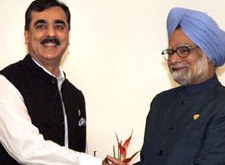
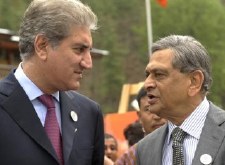

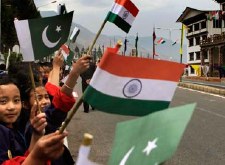
With the SAARC Summit gathering steam in Thimphu, Bhutan, there is much talk of a serious meeting and possibly some joint communique from Prime Ministers Yousuf Raza Gillani and Manmohan Singh. But with typical South Asian theatrics, doubts still linger on whether such a meeting will be held and whether something will come of it. A recently more confident Pakistani Foreign Minister is calling on India to move on from 26/11 to start forging better relations with Pakistan. And Indian opinion, jilted by the news of an Indian diplomat who was reportedly “spying” for Pakistan, is also in danger of being turned away from whatever good vibes have been created by the recent warming in the relations between the two neighbors and civil society initiatives such as Amn Ki Aasha, or glitterati gossip of the Shoaib Malik-Sania Mirza wedding, etc.
Much more importantly, perhaps, we have again been reminded by former Pakistani Foreign Minister Khursheed Mehmood Kasuri just how close the two countries were just a little while ago on a real and meaningful agreement on long-standing disputes, including on issues related to water management, to Kashmir, to economic cooperation, etc.
My colleague Moeed Yusuf and I recently published a research paper in the academic journal Third World Quarterly that looks at the history of the Kashmir issue between the Pakistan and India and undertook a detailed content analysis of every proposal made for its resolution in these 60+ years. In short, the analysis suggests that “the dispute may be more ‘ripe’ for resolution today than it has ever been in the past.”
As I have argued elsewhere, this does not mean that the dispute is ready to be resolved. It does mean that there is a opportunity today to improve these relations that must not be missed. But unless the leadership of the two countries really start talking, it will be missed. And that has been by central argument about India-Pakistan relations for many years now. As I said recently at a discussion organized by the Asia Society in New York (with me and Indian defense analyst Raja Mohan as the featured speakers), the simple fact is that “Not talking is never a good way to start talking.” Here is a video of my detailed argument and the ensuing discussion with Raja Mohan (my formal presentation starts around minute 14):
So, my plea for Thimphu and beyond Thimphu remains the same that it was before Thimphu. Please talk, Dear Prime Ministers. And please keep talking.




Thanks so much for giving everyone such a nice opportunity to discover important secrets from this blog. It really is so excellent and full of a lot of fun for me personally and my office colleagues to visit the blog really 3 times in a week to read the fresh issues you will have. And of course, I am also always fulfilled with your great tips served by you. Certain 4 facts in this post are ultimately the simplest I’ve ever had.
Wow! Thank you! I continually needed to write on my blog something like that. Can I implement a fragment of your post to my blog?
I was wondering if you ever considered changing the layout of your site? Its very well written; I love what youve got to say. But maybe you could a little more in the way of content so people could connect with it better. Youve got an awful lot of text for only having one or 2 pictures. Maybe you could space it out better?
I believe this web site contains some very superb information for everyone. “Glory is fleeting, but obscurity is forever.” by Napoleon.
https://mannensapotek.com/# Sildenafil-tabletter pris