 Adil Najam
Following up on our post last week about a man beating up his wife with his children watching (earlier post here), it is heartening to find that the government is contemplating a new law on domestic violence – The Protection Against Domestic Violence of Women and Children (PADVWC) Act.
The tragedy is that this will nearly certainly become controversial, and for all the wrong reasons.
There will be those who will oppose it simply because they oppose the government and therefore believe that anything that the government does – even when it is clearly the right thing – should be opposed. Such pettiness does not deserve response, even if it is rampant. It is not just immature but dangerous to oppose that which we believe to be good just because we believe that those pushing it are not.
Some will feel uncomfortable with the discussion because it might sully the ‘image’ of the country. I, for one, have never understood this argument. The way to salvage our ‘image problem’ is not to ignore and keep silent about systemic societal problems, it is to do something about these problems. Which is what this law does.
Read Full Post
By S.A.J Shirazi
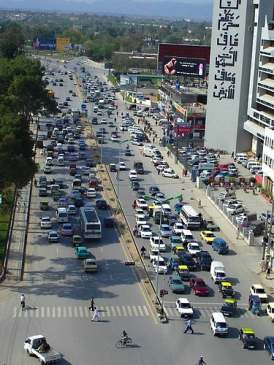 The bustling city of Rawalpindi has a lot more to offer than a traffic mess, broken roads and haze-filled atmosphere. The city’s history spreads over several millennia. Archaeologists believe that a distinct culture flourished on this plateau even 3,000 years ago.
.. Photo to the left is a shot of the Mall, Rawalpindi ..
The archaeological remains found here prove the existence of a Buddhist community contemporary to Taxila, but less celebrated than its neighbour. Historians believe that the ancient city fell victim to the devastation caused by the Huns. The first Muslim invader, Mahmud of Ghazni (979-1030AD), gifted the ruined city to a Gakkhar chief, Kai Gohar. The Gakkhars were a fiercly independent tribe of the Potowar Plateau. The town, however, being in the route of invaders, could not prosper and remained deserted until Jhanda Khan, another Gakkhar chief, restored it and named it Rawalpindi after the village Rawal in 1493.
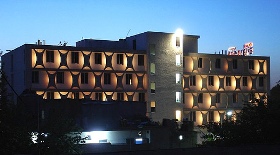 Rawalpindi remained under the rule of the Gakkhars till Muqarrab Khan, the last Gakkhar ruler, was defeated by the Sikhs in 1765.
.. Photo to the right shows Hotel Shalimar, Rawalpindi ..
The Sikhs invited traders from other places to settle here, which brought the city into the limelight.
Read Full Post
Adil Najam
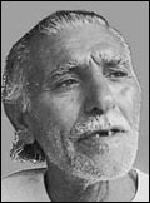 Today, April 28, there is a folk music program being organized in Kot Addu to mark teh 7th death anniversary of Pathana Khan. This is not the type of event that people talk about. But they should.
I remember, back in March 2006, when I heard that Pathanay Khan had died, my eyes had swelled up.
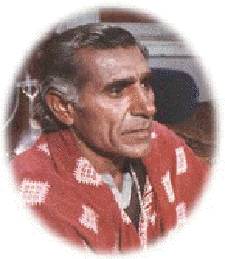 Maybe its because I am the emotional type. Or maybe it was because Pathanay Khan had introduced me to the beauty of Saraiki sufiana kalam and there are very few things, if any, that even remotely resembles the spiritual and musical power and prowess of Pathanay Khan singing ‘menda ishq vi toun, menda yaar vi toun‘ or ‘mera Ranjan hunn koi hour.’
I suspect, however, that it was the conditions in which he died that really got to me. Some years ago, the eqully spell-binding Muhammad Jumman (of the ‘yaar daadi aatish ishq nay lai aye‘ fame) had reportedly died in rotting conditions in the corridors of a Karachi hospital. A nation that should have been in awe of him had been unaware and uninterested in the conditions of the maestro. Pathanay Khan’s death came in a similar state of personal impoverishment and national neglect.
Read Full Post