Custom Search

Remembering 9.11.1948

Posted on September 11, 2006
Filed Under >Adil Najam, History, People
90 Comments
Total Views: 16170

Share

Adil Najam

Today is 9/11. Much will be written and much discussed on the 5th anniversary of the cruel attacks on the World Trade Center in New York, on what has happened since, on all the ways in which the world changed, and on all the other ways in which it did not. Today is a sad day, and at ATP our hearts and prayers go out to the dear ones of the victims of this tragedy, and to the loved ones of all who have lost their lives in the events that were unleashed by it.

While 9.11.2001 will be much debated elsewhere, we here at ATP want to recall the events of 9.11.1948.

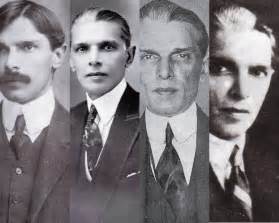
For Pakistanis, 9/11 has always been a sad date. A date on which - barely a year after the nation’s birth - its founding leader, Mohammad Ali Jinnah, died. Here is a short (50 sec) newsreel video clip with a report by Gaumont British News on Mr. Jinnah’s death (made availabel on the Internet by the GandhiServe Foundation):

Like every year, APP has announced in advance how the “nation” will mark this occasion, and every newspaper (e.g., Dawn) has printed this “news” on its front page:


ISLAMABAD, Sept 10: The nation will observe Quaid-i-Azam Mohammad Ali Jinnah’s 58th death anniversary on Monday with a pledge to transform Pakistan into a vibrant, progressive and enlightened country as envisioned by the great leader.

I am glad that the APP has he psychic power to know exactly how this “nation” will observe the anniversary, even before the occasion. They have been making the same stale prediction every year for as long as I can remember. Maybe, we as a “nation” do actually make that “pledge” every year. Its just that we have not been very good at keeping the pledge.

Some might argue that the “nation” had already begun to let Mr. Jinnah down even in those brief 13 months that he lived in the country he had founded. Others like to believe that Pakistan’s history might have taken a very different path had he lived longer. It may well have. I am just not sure what that path might have been given that tensions between him and those who were running day-to-day Pakistan had begun to appear even while he was alive.

His death, and the circumstances of his death, was itself not without controversy (see, for dramatic effect, the opening scenes of the movie, Jinnah, here). But today, September 11, should not only be a sad reminder of his untimely death. It should also be a moment to reflect on his life. And, maybe, it should be a moment to reflect on what lessons that life might have to offer for the future.

From its very inception, ATP has had an ongoing discussion on the legacy of Mr. Jinnah and the various meanings it has for different people. Today seems to be an appropriate day to continue that discussion; to think, yet again, about the meaning of the life and death of Mr. Jinnah.

Related ATP Posts:
- Read about the Other Side of Mr. Jinnah
- Watch Jinnah: The Movie
- Read about Jinnah’s first message to the nation
- Watch historic footage from August 1947
- Read about the Jinnah-Gandhi relationship
- Listen to and watch Mehdi Hassan’s classic, “yeh watan tumhara hai”, which is in many ways Jinnah speaking to the rest of us.

Related Posts with Thumbnails

90 comments posted

Comment Pages: « 1211 10 9 8 7 [6] 5 4 3 2 1 »

  1. saima nasir says:
    September 17th, 2006 8:53 am

    Dear YLH,
    you said ,”Your suggestion that I am writing more about why I dislike Gandhi … please note the few references I made to Gandhi were entirely in response to your assertions. My own ideas about Jinnah maybe found in the article I wrote on him which is quoted in the second post on this board. ”

    In my first post i mentioned Gandhi and Nelson Mendela together…but this discussion turned towards the comparison of Gandhi and Jinnah only and not any other leader of the world.

    Sridhar in one of his reply post to Mr. Najam answered my query pretty well when he wrote, “Something like honesty in the case of Jinnah and truth in the case of Gandhi. I think if one thinks at that level, both of them emerge, in my view, to be great people. Both of them changed views and even deeply held beliefs, but such changes were consistent with their values nevertheless. For instance, when Jinnah’s views about the politics of Hindu-Muslim relations changed, it was still consistent with his belief in justice. When Gandhi changed his views about races and caste, overcoming his inherited biases and prejudices, he himself wrote that it was a result of his quest for truth.

    On the question of whether they were visionaries, I don’t think either of them emerges as a visionary by my test. Both of them undertook actions that had unintended and sometimes horrible consequences, that could have been foreseen by men of their intellect and experience and were in fact foreseen by some of their own contemporaries.”

    Although,I won’t end my search for answers here and will keep reading and researching but I still hold my views about using ones heart along with a balanced head in analysing a situation whether in present or historical.
    Iam reading this book called “The Shadow of the Great Game : The Untold Story of India’s Partition, written by Narendra Singh Sarila.”
    Maybe then, we can discuss the two-Nation theory and the creation of pakistan…until then… all the best.

  2. saima nasir says:
    September 17th, 2006 8:25 am

    Dear Adnan Siddiqui,

    Don’t twist my discussion with you into a malicious campaign on this forum. Anyone can go on your blog and read my views over there and can see that i never said anything about “visionary being connected to consuming alcohol”…..you were portraying Jinnah as a staunch muslim in one of your posts, who dreamt of pakistan with islamic laws (which for you is huddod ordinance)and I corrected you, that for Jinnah ,religion was a personal matter and gave you examples of secular states where muslims like me live a safer live as compared to present day islamic pakistan…..which you seem to have made fun of… and these were two different posts ,which you in your zealousness seems to have combined.
    i had asked you that why you liked jinnah so much, the same question which i asked on this forum and got links and information and insight into what people like or admire about him…..
    If you had taken time to read my post i had admired jinnah for his integrity and righteousness and for all his achievements…..but you, who was beaten on the same forum for your support of huddood ordinance and dislikenes for the liberals and seculars have returned with a lies and want Mr.YLH to help you in your juvenile attempt to distort facts….who apparently is pretty liberal and secular in his views and …
    i stand by my claim that
    Nehru and Gandhi are portrayed as bad guys in the Pak.studies book and …that hitory is distorted in those books.
    I like jinnah for the qualities he had but am in no way in awe of him……
    I didn’t mention Gandhi only in my first post but Nelson mendala as well …..

    If you have anything serious to talk about do so but don’t put words in my mouth as i can convey my point of view very well and hardly need an interpreter like you.

  3. September 17th, 2006 6:16 am

    YLH Brother,I really like and admire your knowledge about particular topic.Good going and Keep it up.

    I have experienced ms.Saima nasir on my space as well where he thrown similar things aginast Jinnah.Since you and few others seem more knowledgeable about JInnah sahab.Saima claimed on my blog that Jinnah took alcohol therefore he cant be a visionary leader.She also said tht Mr.Pirzada had made such statment about Jinnah Sahab.Now could you say anything about that.

    Saima Nisar gave a URL to back her statement that Pak.Studies represent Gandhi as a bad person.On other hand she claims she spent her life in Pakistan.Now I am also surprised like you to learn which kinda Pak.Studies book potrayed Gandhi a bad man?I doubt whether the lady really studied in Pakistan.I would rather say that I talked with Indians who blame Gandhi for the partition and dont like them.What I know that both Gandhi and JInnah used to admire each others skills.Speaking of Pakistani text books that they preach haterd against Gandhi.Like Saima i can also quote few links of famous Indain online discussion forum Sepia Mutiny which present Jinnah as a pork and wine lover.

    [quote post="301"].but you write more about your dislikness for Gandhi than about your admiration for Jinnah.[/quote]

    Saima,I thinkyou shouldnot blame to YLH.Your own several posts reflecting dislikeness against Jinnah so its all about ‘mind game’ rather reality.

  4. September 17th, 2006 4:26 am

    Dear Saima Nasir,

    First of all- I hope you will acknowledge that story of Pakistan for what it is worth is not a Pakistan Studies book … Pakistan Studies curriculum doesn’t mention Gandhi or Nehru much. The problem with Pakistan Studies syllabus is that it tries to Islamise Jinnah. I infact remember reading a chapter praising Gandhi as a man of non violence in one of these books.

    First of all, with all due respect…let us not make strawman fallacies in the name of the two nation theory. Two Nation Theory was a consociationalist interim solution. As the only politician to be known as the Best Ambassador of Hindu Muslim Unity Jinnah had spent a life tme trying to infuse Hindus and Muslims into one Indian nation but at fair and equitable terms…

    Two Nation Theory did not till the very end suggest that Hindus and Muslims could not live together, but that since there were two distinct identities (given the disproportionate growth of bourgeoisie in both societies)and should have adequate constitutional safeguards which should ultimately evolve into one Indian identity. After 1940, Jinnah came to the conclusion that a strong all India center and one Indian federation was itself a idea that was a British concoction and that India could work better as a confederation of two or more federations with one army and one foreign policy. He realised that if there was to be a federation that would be Hindu majority, shaped (as all states are) by the ethos of its majority, then why not have another federation or two federations with Muslim majority.

    This was the essence of the Pakistan resolution. It was the Congress that rejected this idea… it was the Congress that insisted on partitioning Punjab and Bengal.. which is the real cause of bloodshed. Jinnah’s vision of the state was of a constitutional state which would treat all its citizens and communities impartially and equally. Constitutionally, India has done that better than Pakistan… is India then not closer to Jinnah’s vision, even if marginally- However… the problems Jinnah saw and was afraid of in the 1930s are still there… Vande Mataram is still a contentious issue… Hindu Muslim violence still occurs… however the fact that Pakistan’s record is nothing to write home about goes without saying, which is why I consider India to be closer to Jinnah’s vision. (Your suggestion that Bangladesh was created and two nation theory was debunked is also fallacious. Jinnah and the Muslim League had agreed to an independent Bangladesh in 1947 under a coalition of Suhrawardy and Sarat Bose - brother of Subhas Chander bose… it was Nehru who had vetoed the idea.)

    Your suggestion that any Muslim in India is living as good or bad as a Muslim in Pakistan also flies in the face of facts. It has been acknowledged that the Muslims as a community did not have an industrial base untill Pakistan was created. Sumit Sarkar a famous Indian historian credits Pakistan for creating the Industrial base for bourgeoisie… sure you’ll find a token example of a successful Muslim here and there, but the whole class of bourgeoisie that Pakistan’s existence created … forcing the hitherto agricultural and/or “martial” Muslims to adopt such professions like Banking, commerce, education etc (which were till then the exclusive domain of the Hindu Bourgeoisie given Muslims’ lack of interesT) … Pakistan in essence, despite its faults, did for the community as a whole what Aligarh had done educationally. This is primarily why the biggest supporters of the Muslim League were the Communist Party of India… and the biggest supporters of the Congress were the Mullahs who saw in Pakistan an erosion of their clerical authority.

    Also you can’t analyse anything wit your “heart” because it denotes biases and we are all victims of our emotions when judging things… you can only use your head. I totally endorse your suggestion of looking at history critically, but don’t you agree that your contention that A B or C doesn’t warm your heart is hardly a basis for critical analysis.

    Your suggestion that I am writing more about why I dislike Gandhi … please note the few references I made to Gandhi were entirely in response to your assertions. My own ideas about Jinnah maybe found in the article I wrote on him which is quoted in the second post on this board.

  5. saima nasir says:
    September 17th, 2006 3:36 am

    Dear YLH,

    I have read your whole post and have done that in the past also……infact i have read those posts twice or thrice at times to understand and find information which i did not have about Jinnah…..but you write more about your dislikness for Gandhi than about your admiration for Jinnah. i have read Wolpert’s and Ayesha Jalal’s work and would Try to get Mitchell’s documentry that you have mentioned in your post.

    You said, “No one is asking you to fall in love with Jinnah … far from it… Jinnah’s greatness is not dependent on people falling in love with him because of gimmickery… what is great about Jinnah is his honesty, integrity, sense of fair play and justice… and above all his sense of duty… all habits and ideas that he imbibed from the British legal tradition which defined him essentially and where he is honored on the hallowed hall of British legal history…”

    I had agreed with all these qualities in my very first post and had inquired to know more about him….on a different level…..by the way..

    I am pretty proud to be an emotional being as it is the awareness of my emotional state which makes me understand other human beings and also pushes me to bring in a positive change in myself when required.

    what is written about about Gandhi and Nehru in pakistan studies books and the level of mistrust Indian muslims were shown to have against the Hindu leaders can be seen on this link

    http://www.storyofpakistan.com/

    yet so many muslims decided to stay back in India and are leading as good or bad a life as any muslim in Pakistan…..then…..when you say, “Nehru’s secularism resembles more closely Jinnah’s vision than Pakistan”, I am left perplexed ……where does that leave the two nation theory which is the ideological basis for pakistan????? thats why i would want my children to use thier HEADS and HEARTS when reading and analysing history ….whether ours or some one elses.

  6. September 16th, 2006 1:44 pm

    Sridhar,

    I still believe I accurately interpretted your failed attempt which you have since aborted…

    Also- the point specifically remains. Jinnah’s record in England as a radical liberal suffragist in alliance with the quakers, steeped in British legal tradition which by then had very strongly ruled out racial consideration in matters of state, and his association- however brief- with the British Labour Party and his membership of the Fabian Society (endorsing Fabian socialism), rules out the possibility of there being any views that he held which were analogous to those of Gandhi quoted hereinabove.

    Lets also not forget that while the “Mahatma” Gandhi denounced the suffragists as “workers of satan”… Jinnah was a very proud suffragist fighting ror the rights of women to vote …

    Sadly - Pakistan has given up Jinnah’s ideals and therein lies the greatest irony… India shaped by Dr. B R Ambedkar’s constitutional ideas and Nehru’s secularism resembles more closely Jinnah’s vision than Pakistan.

  7. September 16th, 2006 1:33 pm

    Saima Nasir,

    I hope you will read the whole post…

    Could you please point out which Pakistan Studies books say nasty stuff about Gandhi and Nehru because there isn’t any and I have actually researched it. There is a problem with Pakistan studies books that is very clear: They try and present an essentially political movement for a minority claiming to be a nation as something else… something quite unlike what Jinnah imagined it to be. The Pakistan Studies books are wrong because they wish to ascribe an Islamised and Mullahized version of Jinnah and the Pakistan movement which has no roots in reality.

    My own apathy for Gandhi (not Nehru who I admire for many other reasons even if I am critical of his role in the final phase of partition) started when I read Gandhi’s collected works. Before that, I looked at him as the founding father and a great man of a neighbouring nation. When I read his works, I found what I have already quoted above… and then I read the views of Dr. B R Ambedkar, the principal author of the Indian constitution, whose description of Gandhi was much unflattering than any Pakistani’s… For reference read B R Ambedkar’s “What have Congress and Mr Gandhi done to the untouchables” and “Gandhi or Gandhiism”…. I found these books in my alma mater’s library in the US.

    We should draw the right conclusions for the right reasons.
    How does Bangladesh’s creation undo say Two nation theory for example… when Bangladesh’s creation reaffirms the Lahore resolution. Bhupinder has called Jinnah the “Last Congressman in India” … barring Ghaffar Khan, he was. The very fact that Jinnah… the only politician hailed in the history of the subcontinent as the Best Ambassador of Hindu Muslim Unity

    Ayesha Jalal’s Sole Spokesman is a great book… but better than this book is H M Seervai’s “Partition of India Legend and reality… H M Seervai, a parsi, was one of the greatest Indian jurists ever and is well respected as India’s greatest constitutional lawyer. He has conclusively proved that it was Gandhi’s manipulation that left Jinnah no choice but to opt for partition. An earlier book “Jinnah and Gandhi: Their role in India’s quest for freedom” by S K Majumdar, a Bengali Indian Barrister… argues similarly.

    You are right when you say that you should not instill in your children a blind admiration and idolisation… very good… but that is exactly what you are NOT doing. Your objection so far to Jinnah is that he doesn’t warm up your heart (presumably because Jinnah was quintessentially a victorian barrister and parliamentarian unconcerned with “warming hearts” and making people fall in “love” with him) …

    Unlike Gandhi who announced every good deed he did and used it to market himself as the “Mahatma”… Jinnah did most things out of a sense of duty. How many people know that he left most of his wealth to leading educational institutions of India and Pakistan.. including the renowned “Bombay University” … how many people know that there is still a trust fund in Bombay called “Jinnah Memorial Trust” which helps poor students from all communities and backgrounds to get an education? There were countless things that Jinnah did which he could have used to market himself… but he didn’t. Even the people he saved (and in Karachi, he saved as many if not more Hindus as anyone in India vis a vis Muslims) …

    No one is asking you to fall in love with Jinnah … far from it… Jinnah’s greatness is not dependent on people falling in love with him because of gimmickery… what is great about Jinnah is his honesty, integrity, sense of fair play and justice… and above all his sense of duty… all habits and ideas that he imbibed from the British legal tradition which defined him essentially and where he is honored on the hallowed hall of British legal history…

    However… what is required is you live up to your own words and stated objective : Not to admire people or idolize them because of emotional reasons … but to analyse them impartially and without pre-conceived notions and/or goody lets sing kumbaye unrealism.

    On another note… a great documentary by Christopher Mitchell’s “Mr Jinnah and the Making of Pakistan” (not to be confused with Jinnah the movie which is almost as ridiculous as Gandhi the movie) does a great job explaining Jinnah’s life … and I am sure you’ll find an emotional angle or two.

    -YLH

  8. September 16th, 2006 12:03 am

    Based on the discussion on this post, I cannot but help concluding: Mohammad Ali Jinnah was the last Congressman in Pakistan !

    If I am not mistaken, no other major leader in post- Jinnah Pakistan was deeply rooted in the Indian National Congress.

Comment Pages: « 1211 10 9 8 7 [6] 5 4 3 2 1 »


Have Your Say (Bol, magar piyar say)

Please respect the ATP Comment Policy.

Keep comments on topic; no personal attacks; don't submit indecent, inflammatory, slanderous, uncivil or irrelevant comments; flamers and trolls are not welcome; inappropriate comments will be removed or edited.

If you won't say it to someone's face, then don't say it here!

Readers who want to use a URL should please use the TINY URL program.

Thanks, and keep the comments coming!