Adil Najam
This one is for all those who think that the international media gives Pakistan a bad rap (it does, but probably less than what we believe):
‘Powerful Pakistan have few weaknesses’
Yes, you read it right. That is what the Scyld Berry at The Daily Telegraph (UK, 25 June, 2006) believes.
For those of us who get their news from the Internet, and especially from RSS streams, the headline is all-important. And if this one does not grab your attention, I do not know what will.
Want to find out what this headline is talking about.
Read Full Post
Adil Najam
 As ATP had noted in a blogpost on 21 June, 2006, Indians are laughing at Pakistanis. In fact, they are laughing so hard that the ‘world largest democracy’ just voted a 40-year old Pakistani stand-up comic as the ‘Funniest Man in India.’
According to a news report at rediff.com:
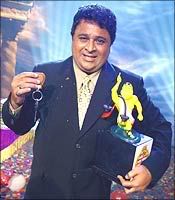 Pakistan’s Rauf Lala has been voted by an Indian audience as the winner of Star One’s popular comedy show, The Great Indian Laughter Challenge: Dwitiya. In a neck-to-neck contest, Lala beat Mumbai’s Rajeev Nigam to become Numero Uno on the show that has been making audiences roll with laughter for 18 weeks…. Among other goodies, Rauf also bags a brand new Chevrolet Aveo as part of the winning deal. Asked to comment on his victory, Lala — who hails from Karachi and has been doing stage shows for more than two decades now – says, “When my name was announced, I thought I was dreaming. I still find it difficult to believe. I am sure everyone back home in Pakistan is proud and happy….” Mumbai’s Rajeev Nigam was the 1st runner-up [and] had to say about him: “We are extremely happy that Bade Bhaiyya (Lala) won the contest. We never had any doubts about his capabilities and knew he was the best and the most eligible. To be honest, I would have felt bad if it were anyone else.”
It seems that the Mughal-e-Azam premier idea has now gone sour (also see here), but at least there is something about India-Pakistan people-to-people diplomacy worth smiling–even laughing–about.
 Adil Najam
The very first blogpost on ATP was the video tribute to Pakistan I had made using Faiz Ahmed Faiz’s classic poem ‘hum daikhain gay...’ This was not just blatant self-projection — although it was that too. It was an expression of my hopes and concerns, an acknowledgement of my gratitude to Faiz’s poetry, and in many ways a ‘statement of purpose’ for this blog.
 A number of people have asked me to post an English translation of the poem ‘hum daikhain gay...’ There are, of course, many available translations of this classic work. But I wanted to share a new one with you. This is by Maniza Naqvi and I find this particularly powerful because it is simple and true to the original words and yet is able to also convey the intensity of poem’s intent. Translating poetry is never easy. Here is a good example of how it should be done.
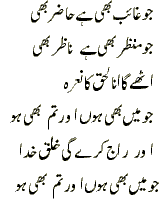
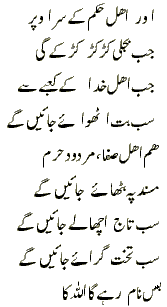

We shall see/certainly we, too, will see/
that day that has been promised us
When these high mountains
Of tyranny and oppression/ turn to fluff
And evaporate
And we oppressed
Beneath our feet will have
this earth shiver, shake and beat
And heads of rulers will be struck
With crackling lightening and
thunders roar.
When from this God’s earth’s (Kaa’ba)
All falseness (icons) will be removed
Then we, of clean hearts–condemned by zealots those keepers of faith,
We, will be invited to that altar to sit and Govern–
When crowns will be thrown off–and over turned will be thrones
We shall see/certainly we, too, will see
that day that has been promised us
Then God’s name will remain (Allah will remain)
Who is invisible and visible too
Who is the seer and and is seen
Then will rise one cheer———I am God!
Who I am too
And so are you
Then the masses (Khalq e Kuda) people of God will rule.
Who I am too
and so are you
Then will rise one cheer———I am God!
Who I am too
And so are you
(Translation by Maniza Naqvi)
 You will find much written on Maniza on the web–for example, here, here and here. She works at the World Bank, lives in Washington, DC, and is an active intellectual whose works include (apart from others) ‘Mass Transit‘ (a novel based in Karachi about the emotional consequences of mass migration and “an immigrant population which never really assimilates”) and ‘On Air‘ (another novel where the plot unfolds over a six-hour period in which the main character,
  Naz, tells stories to listeners and callers over the radio on a late night talk show slot that she has been offered to fill for just one night).
In reviewing ‘On Air’, Asif Farrukhi, writes:
Post-nuclear Pakistan is a medley of voices–the enigmatic female host of a phone-in talk show discovers as opinions abound, pizza, hijab, recipes which are a part of culture and not sectarianism, come together in a compelling narrative… A welcome addition to the stunted list of Pakistan’s writers in English, Maniza Naqvi is a name to look out for.