Adil Najam
Today is 9/11. Much will be written and much discussed on the 5th anniversary of the cruel attacks on the World Trade Center in New York, on what has happened since, on all the ways in which the world changed, and on all the other ways in which it did not. Today is a sad day, and at ATP our hearts and prayers go out to the dear ones of the victims of this tragedy, and to the loved ones of all who have lost their lives in the events that were unleashed by it.
While 9.11.2001 will be much debated elsewhere, we here at ATP want to recall the events of 9.11.1948.
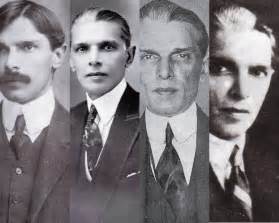
For Pakistanis, 9/11 has always been a sad date. A date on which – barely a year after the nation’s birth – its founding leader, Mohammad Ali Jinnah, died. Here is a short (50 sec) newsreel video clip on Mr. Jinnah’s death :
Like every year, APP has announced in advance how the “nation” will mark this occasion, and every newspaper (e.g., Dawn) has printed this “news” on its front page:
ISLAMABAD, Sept 10: The nation will observe Quaid-i-Azam Mohammad Ali Jinnah’s 58th death anniversary on Monday with a pledge to transform Pakistan into a vibrant, progressive and enlightened country as envisioned by the great leader.
I am glad that the APP has he psychic power to know exactly how this “nation” will observe the anniversary, even before the occasion. They have been making the same stale prediction every year for as long as I can remember. Maybe, we as a “nation” do actually make that “pledge” every year. Its just that we have not been very good at keeping the pledge.
Some might argue that the “nation” had already begun to let Mr. Jinnah down even in those brief 13 months that he lived in the country he had founded. Others like to believe that Pakistan’s history might have taken a very different path had he lived longer. It may well have. I am just not sure what that path might have been given that tensions between him and those who were running day-to-day Pakistan had begun to appear even while he was alive.
His death, and the circumstances of his death, was itself not without controversy (see, for dramatic effect, the opening scenes of the movie, Jinnah, here). But today, September 11, should not only be a sad reminder of his untimely death. It should also be a moment to reflect on his life. And, maybe, it should be a moment to reflect on what lessons that life might have to offer for the future.
From its very inception, ATP has had an ongoing discussion on the legacy of Mr. Jinnah and the various meanings it has for different people. Today seems to be an appropriate day to continue that discussion; to think, yet again, about the meaning of the life and death of Mr. Jinnah.
Related ATP Posts:
– Read about the Other Side of Mr. Jinnah
– Watch Jinnah: The Movie
– Read about Jinnah’s first message to the nation
– Watch historic footage from August 1947
– Read about the Jinnah-Gandhi relationship
– Listen to and watch Mehdi Hassan’s classic, “yeh watan tumhara hai”, which is in many ways Jinnah speaking to the rest of us.




what will you guys say why he cutt of his relationship with his beloved daughter when she married a parsi?
dear YLH
[quote post=”301″]suggests that Saima Nasir was saying anything offensive per se about Quaid-e-Azam[/quote]
Saima said:
[quote post=”301″]Jinah by the way was hardly a muslim….if alcohol consumption is a crime then the founder of the nation committed that crime openly….so where does that leave us[/quote]
My only objection is that she was trying to convince me[if I am wrong then she can clarify] that since jinnah took wine because she read somwhere thefore he was hardly a muslim thus Pakistanis shoudnt potray him a ‘good muslim’ anyway and shoudn’t be respected as hes respected by Pakistani becasue as she said
[quote post=”301″]No one in pakistan will write in a news paper about jinah’s nack for a drink[/quote]
thats what the point she made in her comment and created doubts about him and made him secular which I disagree and disliked as a Pakistani.If such doesnt appear offensive then pope is innocent too.
[quote post=”301″]I am not sure why either of you are making a big deal about it.[/quote]
I already explained she built a theory on basis of some attribute which really can’t be used to analyze jinnah’s mind set.
Speaking of making it an issue,I wonder you didn’t go thru Indians do make this an issue against Jinnah.
[quote post=”301″]eventhough critical analysis is her god-given right[/quote]
Offcourse thatswhy I never banned her to say anyting on my site and will never do as long as she or anyone doesn’t call names.
quote post=”301″]Shahab Nama, essentially a fictional treatise and a product of an overactive imagination to prove any points against anyone will not do us any good.[/quote]
Have you really read Shahab nama or read few pieces of it in Jang and other urdu magazines?Do you deny that Q.U.Shahab was not an ICS before partition and never particpiated in freedom movement?
[quote post=”301″]the British tradition… fond of a little scotch and had red wine with dinner. [/quote]
What is your source?I did make few searches on Google and mostly indians sites cameup and then site about Ibn-e-Warraq who even made stories against Muhammad(SAW) so that guy is not credible for me anyway like Rushdie.I also found a link of shia website which claimed he was a shia ;),same site says he used to eat pork.If such sources are considered *reliable* then I would ignore it like I read and ignore Bush’s claim to carry on ‘War on terror’.
But since your statment wouldbe based on some other source then I would really like to know about it.
Thanks
Adnan Siddiqui,
I have my objections against Gandhi which I have quoted above, but to quote Shahab Nama, essentially a fictional treatise and a product of an overactive imagination to prove any points against anyone will not do us any good.
As for Jinnah’s drinking habits… he was like all great barristers in the British tradition… fond of a little scotch and had red wine with dinner. I am not sure why either of you are making a big deal about it.
Now I have gone to the said links and I haven’t found anything that suggests that Saima Nasir was saying anything offensive per se about Quaid-e-Azam, eventhough critical analysis is her god-given right. She certainly did not call Jinnah an alcoholic from the looks of it.
[quote post=”301″]Nehru and Gandhi are portrayed as bad guys in the Pak.studies book and …that hitory is distorted in those books[/quote]
And I am still curious of youe educational background whether it was in Pakistani schools or foriegn.Atleast I am sure about Sind textbookx that neither Nehru nor Gandhi was potrayed bad anyway.I am not sure about other provinces text books.Speaking of Gandi,I would recommend you to make a study abot Cripps mission,Quit India movement by Gandhi and auto biography of Qudratullah Shahb,”Shahab Nama”.Shahab shab has revealed that how ‘peaceful’ Gandhi was and what kinda conspiracies was being built against Jinnah and how clevery he handled it.
[quote post=”301″]Don’t twist my discussion with you into a malicious campaign on this forum[/quote]
I am just sharing with this forum what you said on my space.
[quote post=”301″]that i wrote on your blog that pirzada made an absurd accusation that because Jinnah consumed alcohol[/quote]
Intresting Saima.You didnt even think of that if one really reads your thoughts about Jinnah then certainly would advise you to take rest.Since you claimed that I am making a pathetic attempt to offend you,why not I just copy your words from my blog here so that readers can handly you accordingly.From this post.
Said said:
..Jinah by the way was hardly a muslim….if alcohol consumption is a crime then the founder of the nation committed that crime openly….so where does that leave us
then in Sept 11 post
i gave you the name sharifuddin pirzada who worked with jinah and knew him and there are others as well who would tell you the same.No one in pakistan will write in a news paper about jinah’s nack for a drink
Saima if bullying could prove someone right and other wrong then earth could be a peaceful to live.
-Cheers
p.s:I have backup of my posts,incase if you go and delete your entries from my blog.