Owais Mughal
 Higher Education Commission (HEC) of Pakistan has recently released the university rankings of Pakistan. The rankings are generating so much interest that I am receiving four to five emails daily with people forwarding me the same link to HEC’s ranking web page. (Scroll down to see rankings and details).
I am kind of disappointed with my alma-mater, NED University of Engineering and Technology Karachi, ranked at number 10 out of the 13 Engineering Universities of Pakistan. The photo to the right-below shows few views of NED University.
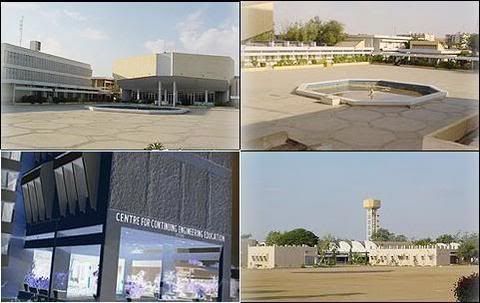 I genuinely and of course with a little bias think that NED university should have been ranked among the top 3. When I make such claim; I do it on the basis of sheer engineering talent I’ve personally seen at NED. But rankings do not take into account the student talent. They look at finances, faculty, number of students etc. My university mates as well as the university officials have already started the discussion on how to improve the rankings next year. This discussion is going on at many NED online alumni groups. I am sure similar discussions are going on within other university alumni too. This I think, is a positive sign of publishing a list like this as it does create competition.

Here are the key leaders in the ranking:
Agriculture / Veterinary
1. University of Agriculture (UAF), Faisalabad
2. NWFP University of Agriculture , Peshawar
3. University of Arid Agriculture, Rawalpindi
4. Sindh Agriculture University, Tandojam
Art / Design
1. National College of Arts, Lahore
2. Textile Institute of Pakistan, Karachi
3. Indus Valley School of Art & Architecture, Karachi
Business / I.T.
1. Lahore Uni. of Management Sciences (LUMS), Lahore
2. Institute of Business Administration (IBA), Karachi
3. Shaheed Zulfikar Ali Bhutto Institute of Sci. & Tech. Karachi
4. Iqra University, Defence View, Karachi
5. Lahore School of Economics (LSE) , Lahore
6. Institute of Business Management (IBM), Karachi
Engineering
1. Pakistan Institute of Engg. and Applied Sciences, Islamabad
2. National University of Sciences & Technology Rawalpindi
3. Ghulam Ishaq Khan Institute of Engineering, Swabi
4. University of Engg. & Technology (UET), Lahore
5. Mehran University of Engg. & Technology (MUET), Jamshoro
6. University of Engg. & Technology (UET), Taxila
General
1. Quaid-i-Azam University (QAU), Islamabad
2. University of the Punjab, Lahore
3. University of Karachi, Karachi
4. University of Peshawar, Peshawar
5. Bahauddin Zakariya University, Multan
6. Government College Lahore University, Lahore
Health Sciences
1. Aga Khan University, Karachi
2. Liaquat University of Medical and Health Sciences, Jamshoro
3. Baqai Medical University, Karachi
4. Zia-ud-din Medical University, Karachi
You can have a look at the complete rankings, including the scores, the criteria and the methodology of scoring here. I would like to hear your opinion.
ATP’s another post related to University Education and rankings system can be seen here.





The rhetoric of R&D is only beneficial for the careers of the individuals and not for the benefit of the society at large.
@Owais Mughal
Well I beg to differ on that on many accounts.
Only those countries need to do research that have reached a certain level of development and for further growth they have to offer something new, which requires research. Only the least-cost path is the best path. For any country it is better to develop without giving too much input. In other words the growth rates are high if the ratio of output to input is high. The advantage with the under-developed economies, such as Pakistan, is that they can produce very high growth rates without coming up new ideas and by just adopting and adapting the technologies that are already developed. The rich world has to do research because their markets are saturated with the traditional things. How many more TVs can they sell? How many more cars can they sell? So they have to offer something new to sell their products. Thats where the research comes in.
Also research is only needed if there is big or huge market for something. America is too far ahead in Aircraft technology, not because just like Dr. Atta-ur-Rehman they “felt” the need for research but because they have the biggest market in the world for the aircrafts. They are so advanced in computer technology because they are the biggest market for the computers, both hardware and software, in the world. Now China is gradually taking over the USA in the volumes game in almost everything. Still China doesn’t feel too much need for research. But if China’s market is saturated and the companies can’t make more money by selling the same products, and they already sell the most-developed products, then for the companies to growth further would create new products. That is a natural way of doing things. Till now apart from a few things China is not too keen on developing its own technologies because research is costly and the ratio of output to input is low for countries which have to rely on research. No wonder the growth rates for the developed world hardly ever go pass the 3% mark. For countries like Pakistan, even 4-5% is considered low, and that is precisely because of the same reason that in countries like Pakistan where people haven’t yet even adopted the already developed technology, companies can grow without coming up with new products. The cost that Pakistan saves by not spending on research yields higher growth rates for the same input.
We would automatically move into the research gear if our markets are saturated for a particular product and for the companies to grow further they would have to come up with something new. In my opinion it would happen in the mobile telephone sector within a few years. Already there are around 78.7 million mobiles and by 2010 that number is expected to reach 100 million. With that we would be able to achieve the economy of scale and once the market is saturated the companies would have to come up with something new in mobile phones otherwise they won’t be able to grow. They might start developing mobiles keeping in mind the tastes of the people and might start research on that. For instance, they might try to come up with mobiles with even larger battery life, or they would try to come up with the cheapest mobile to sell in the rural areas.
But till the time our market is not saturated for any product then we shouldn’t spend anything on research and should rather try to increase productivity of the labor force with better vocational training. That would be the least cost path to development and according to William of Ockham “the simplest hypothesis is the best hypothesis”.
Ahmad Shahid saheb, I respectfully disagree. PhDs and genuine R&D together form the backbone of a country’s self sufficiency effort. Without PhDs and R&D effort, it is like blind leading the blind in universities and will result in a country which is always dependent on imports (as it is now). Also the worldwide university rankings include weightage to PhD faculty.
I don’t think Pakistan needs R&D. Its just a political joke. We need to produce good engineers and not researchers. Thus we don’t really need PhDs at the university.
i study in mechanical engg department of UET Taxila. Our department has got 4 foreign professors in their faculty. there is a whole new hostel for the foreign faculty and new facilities are developed, Few years back there were barely any PhD there. Now almost half the faulty will have PhD qualifications in a few years.
Still i think the main reason for slow development is sluggish beuraucracy. It is just not possible for students to get financial support for projects and hence no research and development