Owais Mughal
 Higher Education Commission (HEC) of Pakistan has recently released the university rankings of Pakistan. The rankings are generating so much interest that I am receiving four to five emails daily with people forwarding me the same link to HEC’s ranking web page. (Scroll down to see rankings and details).
I am kind of disappointed with my alma-mater, NED University of Engineering and Technology Karachi, ranked at number 10 out of the 13 Engineering Universities of Pakistan. The photo to the right-below shows few views of NED University.
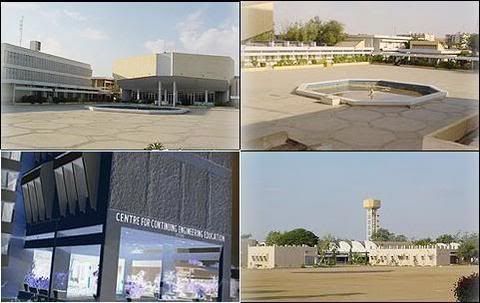 I genuinely and of course with a little bias think that NED university should have been ranked among the top 3. When I make such claim; I do it on the basis of sheer engineering talent I’ve personally seen at NED. But rankings do not take into account the student talent. They look at finances, faculty, number of students etc. My university mates as well as the university officials have already started the discussion on how to improve the rankings next year. This discussion is going on at many NED online alumni groups. I am sure similar discussions are going on within other university alumni too. This I think, is a positive sign of publishing a list like this as it does create competition.

Here are the key leaders in the ranking:
Agriculture / Veterinary
1. University of Agriculture (UAF), Faisalabad
2. NWFP University of Agriculture , Peshawar
3. University of Arid Agriculture, Rawalpindi
4. Sindh Agriculture University, Tandojam
Art / Design
1. National College of Arts, Lahore
2. Textile Institute of Pakistan, Karachi
3. Indus Valley School of Art & Architecture, Karachi
Business / I.T.
1. Lahore Uni. of Management Sciences (LUMS), Lahore
2. Institute of Business Administration (IBA), Karachi
3. Shaheed Zulfikar Ali Bhutto Institute of Sci. & Tech. Karachi
4. Iqra University, Defence View, Karachi
5. Lahore School of Economics (LSE) , Lahore
6. Institute of Business Management (IBM), Karachi
Engineering
1. Pakistan Institute of Engg. and Applied Sciences, Islamabad
2. National University of Sciences & Technology Rawalpindi
3. Ghulam Ishaq Khan Institute of Engineering, Swabi
4. University of Engg. & Technology (UET), Lahore
5. Mehran University of Engg. & Technology (MUET), Jamshoro
6. University of Engg. & Technology (UET), Taxila
General
1. Quaid-i-Azam University (QAU), Islamabad
2. University of the Punjab, Lahore
3. University of Karachi, Karachi
4. University of Peshawar, Peshawar
5. Bahauddin Zakariya University, Multan
6. Government College Lahore University, Lahore
Health Sciences
1. Aga Khan University, Karachi
2. Liaquat University of Medical and Health Sciences, Jamshoro
3. Baqai Medical University, Karachi
4. Zia-ud-din Medical University, Karachi
You can have a look at the complete rankings, including the scores, the criteria and the methodology of scoring here. I would like to hear your opinion.
ATP’s another post related to University Education and rankings system can be seen here.




I was just studying for a semester project and i found out that there is a big amount of R&D that just goes into the Small Industries in Europe. Initially Spain was left behind others because its SMEs did not have a strong back ground in R&D.
I have not read the posts above but I think that R&D is required because even the smallest industrial solutions sometimes need research and development work. Also the solutions for Pakistani industries are different in many ways as everything is not written in text books. Our industry will be stuck where it is unless there is no step taken in this regard. or even if some development is attained it can never be lasting.
@Owais Mughal
I fully agree that in certain areas we might really need research. Because Pakistan is not just an ordinary run of the mill third world country and is quite advanced in certain areas.
As for the need for PhDs teaching at universities, I have some personal experience in this regard. I have taught for over 3 years at Pakistani universities with just a MS from the USA. I have also talked to many PhDs and observed them teaching at these institutions. The level of courses, even at the best universities, is not what requires a PhD to teach them and the level of courses is going down because of the market requirements. Very high technical skills are not required in the Pakistani market, and students are not much interested in learning any skills that might not be of any use to them in the job market. With increased information they are much more informative now. The universities have no option but to bring down the level of courses. And its not just in Pakistan. Here at University of York, UK (74 best in the world according to The Times Higher Education ranking), the courses are being downgraded according to the market needs, and they level of skills they teach is much higher than what any Pakistani university teaches in Computer Science. Pakistan is even much less developed market.
Thanks for your detailed answer. I agree with your conclusion.
The only thing i’ve not understood is why R&D and PhDs can be a burden or non-cost -effective. I gotta think more on that. I can make an idealistic case that the PhDs are needed in universities so that it is not a BS/MS level person teaching the same level students. I also believe R&D is needed in certain areas of economy like Defence OR (say) to make commercial products cost effective.
@Owais Mughal
I think its a very interesting question. Well strictly speaking least cost path may not always be the best path, but it may take a nation to a state of high development, not necessarily the highest development, the difference between the local minima and the global minima.
Well as for the quality and the least-cost path, I think it can be achieved. Once again companies only improve their quality if its advantageous to them. Increasing quality is once again a costly process so it would only be successful if there is a market for quality products and the volumes are large enough to create economies of scale are too huge or else the margin is too high. For the first, you don’t need to have the richest people in the world, just a large number of middle class people. For the latter you need to have a market with big purses, the legendary High Net Worth Individuals (HNWIs). For a country like Pakistan, the first approach is better.
1) People are migrating to urban areas in large hordes from the rural areas. In cities the average incomes are much higher. So the buying power of people is high. According to some estimates, 40% of the population in Pakistan is now urban. That is an enormous 64 million, assuming that our population is 160 million. 64 million is more than the population of either Britain or France. Obviously Pakistan can’t compete with China, India, USA, Indonesia or Brazil on scale, but we can compete with fairly large countries on that account. Though not all of this urban population is in the middle class. Many do live in the slums too. But slums have their own economies too. The famous Dharavi “is home to a $2billion (Rs 8,800 crore) leather industry that employs 2 million and, on 19 February, it will get its first commercial bank branch.” http://www.livemint.com/Articles/2007/02/14003743/Indian-Bank-brings-economic-ma.html
We need to do similar study on Karachi’s slums.
The point is that the total buying power of urbanites even in the poor countries such as Pakistan and India is huge and is certainly much higher than the rural areas people. And they are at the lowest rung of development. Everyone else in a city is in much better financial position. Thus Pakistan can rely on economies of scale to achive higher growth rates and with such a big market, a large number of players would jump in and with competition there would be some quality. That quality would be different from the quality expected by the rich people but it won’t be too poor. As can be seen over the last few years many brands have entered the Pakistani packaged milk market and they are bringing quality in that sector. It would definitely be better than having just the milk pak in the packaged milk sector.
The big problem in Pakistan is the low savings rates, and thats why we have to rely on foreign investment to bring such products to the burgeoning urban market and the foreign exchange is very shy of instability. We can only ensure sustainable development with higher savings rates, which the Pakistani government doesn’t encourage for some reason.
2) In a country such as Pakistan we can have a very small elite and their can’t be too many people belonging to the group of HNWIs, which have liquid assets of over a million dollars. Thus we can’t rely on selling very high quality products, for which we might need research. That can happen in China and India now for very large number of people are becoming millionaires and billionaires.
The rising house prices over the last few years had started creating the HNWI market in Pakistan. Houses in Islamabad now cost around 20 million in the G sectors. Even the cheapest ones are now available for at least 7-8 million. Though that is not a liquid asset but rising house prices increase the salaries for people to be able to pay higher rents, which follow the rising house prices. That doesn’t help those who have to rent a house but tremendously boosts the liquid assets of home owners who rent their property. If it had continued it might have been able to produce a big market for big spenders in big cities. But every boom ends with a bust and so has the housing sectors. Thus the house prices in Pakistan could not reach a stage where they could start impacting a lot. Even though we did witness a rising demand for cars, motorcycles, ACs, TVs and other such items, which can be traced back to rising house prices. The house prices bust might continue for a decade and so won’t be able to produce a large number of HNWIs in Pakistan. Also such a development would be risky for the stability of the country. Since it would make a few people ultra-rich at the cost of others. Such income equality breeds instability and violence and sometimes a virtual collapse of the economy.
So the conclusion is that Pakistan must rely on the urbanite middle class, which can provide economies of scales in our economy, and the kind of goods they require don’t require any amount of research. That is also the least cost path, because this rural-urban migration is a natural phenomenon and the government should try to use it more constructively.
Ahmad Shahid. Got your point on the need of R&D’s relation with market saturation. I am not totally convinced by your theory yet but i am unable to bring any argument against it either :) Let me think more about it. It is still hard for me to believe R&D and PhDs can be useless for a developing country.
Also, tell me more about how ‘least cost path is always the best path’. I am interested in learning more about this theory. Is Quality (which may have different standards for different people) achievable with least cost?
I am by no means set out to prove you wrong, b/c i may be wrong too. I would like to have an educational discussion.