Adil Najam
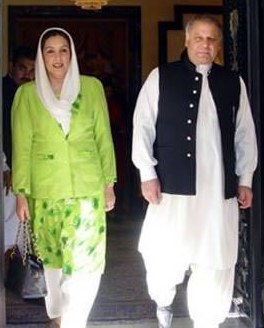 Not surprisingly, Pakistan politics remains a mess.
The President remains the master of brinksmanship. Instead of doing the right thing to begin with, he pushes crises to the edge and then, just in the nick of time takes a U-turn. The judiciary keeps testing the limits of its own power and at least a few get worried about what precedents are being set here for the future. Too much, way too much, of national politics is now being played out in the courts for anyone to be totally comfortable with it. The Prime Minister seems to be settling into the role of statesman, but playing with fire as he balances political loyalty with national interest. The military is surprisingly quiet, but no one can confuse a lack of political statement with the lack fo political influence. The opposition, or to be more precise the PML-N, plays a cautious game and Mr. Nawaz Sharif is as much a master of brinksmanship as Mr. Zardari as he tries to capitalize on every downturn on the roller-coaster but forever careful that the entire process is not derailed, because that would mean his own going down with everyone else.
In all the murkiness that is Pakistan politics, one thing is absolutely clear. Our much aligned constitution is now such a mess and has been mishandled and abused by so many in so many ways that it needs urgent care so that it becomes a document that can be actually implemented as a guide to national governance, rather than as a topic of endless debate and unending discussion. Hence, the ghost of the so-called Charter of Democracy – signed when both Benazir Bhutto and Nawaz Sharif were in exile during the Musharraf era – keeps popping its head up.
Maybe it is time to look carefully at the Charter of Democracy. There is much in there that is extremely – even eerily – relevant to some of the many messes that we are in. Here, for those who might have forgotten what it says, we reproduce the Charter of Democracy as it is worded in May 2006, in its entirety:
CHARTER OF DEMOCRACY
We the elected leaders of Pakistan have deliberated on the political crisis in our beloved homeland, the threats to its survival, the erosion of the federation’s unity, the military’s subordination of all state institutions, the marginalisation of civil society, the mockery of the Constitution and representative institutions, growing poverty, unemployment and inequality, brutalisation of society, breakdown of rule of law and, the unprecedented hardships facing our people under a military dictatorship, which has pushed our beloved country to the brink of a total disaster;
Noting the most devastating and traumatic experiences that our nation experienced under military dictatorships that played havoc with the nation’s destiny and created conditions disallowing the progress of our people and the flowering of democracy. Even after removal from office they undermined the people’s mandate and the sovereign will of the people;
Drawing history’s lesson that the military dictatorship and the nation cannot co-exist – as military involvement adversely affect the economy and the democratic institutions as well as the defence capabilities, and the integrity of the country – the nation needs a new direction different from a militaristic and regimental approach of the Bonapartist regimes, as the current one;
Taking serious exception to the vilification campaign against the representatives of the people, in particular, and the civilians, in general, the victimisation of political leaders/workers and their media trials under a Draconian law in the name of accountability, in order to divide and eliminate the representative political parties, to Gerrymander a king’s party and concoct legitimacy to prolong the military rule;
Noting our responsibility to our people to set an alternative direction for the country saving it from its present predicaments on an economically sustainable, socially progressive, politically democratic and pluralist, federally cooperative, ideologically tolerant, internationally respectable and regionally peaceful basis in the larger interests of the peoples of Pakistan to decide once for all that only the people and no one else has the sovereign right to govern through their elected representatives, as conceived by the democrat par excellence, Father of the Nation Quaid-i-Azam Mohammed Ali Jinnah;
Reaffirming our commitment to undiluted democracy and universally recognised fundamental rights, the rights of a vibrant opposition, internal party democracy, ideological/political tolerance, bipartisan working of the parliament through powerful committee system, a cooperative federation with no discrimination against federating units, the decentralisation and devolution of power, maximum provincial autonomy, the empowerment of the people at the grassroots level, the emancipation of our people from poverty, ignorance, want and disease, the uplift of women and minorities, the elimination of klashnikov culture, a free and independent media, an independent judiciary, a neutral civil service, rule of law and merit, the settlement of disputes with the neighbours through peaceful means, honouring international contracts, laws/covenants and sovereign guarantees, so as to achieve a responsible and civilised status in the comity of nations through a foreign policy that suits our national interests;
Calling upon the people of Pakistan to join hands to save our motherland from the clutches of military dictatorship and to defend their fundamental, social, political and economic rights and for a democratic, federal, modern and progressive Pakistan as dreamt by the Founder of the nation; have adopted the following, “Charter of Democracyâ€;
A. CONSTITUTIONAL AMENDMENTS
1. The 1973 Constitution as on 12th October 1999 before the military coup shall be restored with the provisions of joint electorates, minorities, and women reserved seats on closed party list in the Parliament, the lowering of the voting age, and the increase in seats in parliament and the Legal Framework Order, 2000 and the Seventeenth Constitutional Amendment shall be repealed accordingly.
2. The appointment of the governors, three services chiefs and the CJCSC shall be made by the chief executive who is the prime minister, as per the 1973 Constitution.
3. (a) The recommendations for appointment of judges to superior judiciary shall be formulated through a commission, which shall comprise of the following:
i. The chairman shall be a chief justice, who has never previously taken oath under the PCO.
ii. The members of the commission shall be the chief justices of the provincial high courts who have not taken oath under the PCO, failing which the senior most judge of that high court who has not taken oath shall be the member
iii. Vice-Chairmen of Pakistan and Vice-Chairmen of Provincial Bar Association with respect to the appointment of judges to their concerned province
iv. President of Supreme Court Bar Association
v. Presidents of High Court Bar Associations of Karachi, Lahore, Peshawar, and Quetta with respect to the appointment of judges to their concerned province
vi. Federal Minister for Law and Justice
vii. Attorney General of Pakistan(a-i) The commission shall forward a panel of three names for each vacancy to the prime minister, who shall forward one name for confirmation to joint parliamentary committee for confirmation of the nomination through a transparent public hearing process.
(a-ii) The joint parliamentary committee shall comprise of 50 per cent members from the treasury benches and the remaining 50 per cent from opposition parties based on their strength in the parliament nominated by respective parliamentary leaders.
(b) No judge shall take oath under any Provisional Constitutional Order or any other oath that is contradictory to the exact language of the original oath prescribed in the Constitution of 1973.
(c) Administrative mechanism will be instituted for the prevention of misconduct, implementation of code of ethics, and removal of judges on such charges brought to its attention by any citizen through the proposed commission for appointment of Judges. (d) All special courts including anti-terrorism and accountability courts shall be abolished and such cases be tried in ordinary courts. Further to create a set of rules and procedures whereby, the arbitrary powers of the chief justices over the assignment of cases to various judges and the transfer of judges to various benches such powers shall be exercised by the Chief Justice and two senior most judges sitting together.
4. A Federal Constitutional Court will be set up to resolve constitutional issues, giving equal representation to each of the federating units, whose members may be judges or persons qualified to be judges of the Supreme Court, constituted for a six-year period. The Supreme and High Courts will hear regular civil and criminal cases. The appointment of judges shall be made in the same manner as for judges of higher judiciary.
5. The Concurrent List in the Constitution will be abolished. A new NFC award will be announced.
6. The reserved seats for women in the national and provincial assemblies will be allocated to the parties on the basis of the number of votes polled in the general elections by each party.
7. The strength of the Senate of Pakistan shall be increased to give representation to minorities in the Senate.
8. FATA shall be included in the NWFP province in consultation with them.
9. Northern Areas shall be developed by giving it a special status and further empowering the Northern Areas Legislative Council to provide people of Northern Areas access to justice and human rights.
10. Local bodies election will be held on party basis through provincial election commissions in respective provinces and constitutional protection will be given to the local bodies to make them autonomous and answerable to their respective assemblies as well as to the people through regular courts of law.
B. CODE OF CONDUCT
11. National Security Council will be abolished. Defence Cabinet Committee will be headed by prime minister and will have a permanent secretariat. The prime minister may appoint a federal security adviser to process intelligence reports for the prime minister. The efficacy of the higher defence and security structure, created two decades ago, will be reviewed. The Joint Services Command structure will be strengthened and made more effective and headed in rotation among the three services by law.
12. The ban on a ‘prime minister not being eligible for a third term of office’ will be abolished.
13. (a) Truth and Reconciliation Commission be established to acknowledge victims of torture, imprisonment, state-sponsored persecution, targeted legislation, and politically motivated accountability. The commission will also examine and report its findings on military coups and civil removals of governments from 1996.
(b) A commission shall also examine and identify the causes of and fix responsibility and make recommendations in the light thereof for incidences such as Kargil.
(c) Accountability of NAB and other Ehtesab operators to identify and hold accountable abuse of office by NAB operators through purgery and perversion of justice and violation of human rights since its establishment.
(d) To replace politically motivated NAB with an independent accountability commission, whose chairman shall be nominated by the prime minister in consultation with the leader of opposition and confirmed by a joint parliamentary committee with 50 per cent members from treasury benches and remaining 50 per cent from opposition parties in same manner as appointment of judges through transparent public hearing. The confirmed nominee shall meet the standard of political impartiality, judicial propriety, moderate views expressed through his judgements and would have not dealt.
14. The press and electronic media will be allowed its independence. Access to information will become law after parliamentary debate and public scrutiny.
15. The chairmen of public accounts committee in the national and provincial assemblies will be appointed by the leaders of opposition in the concerned assemblies.
16. An effective Nuclear Command and Control system under the Defence Cabinet Committee will be put in place to avoid any possibility of leakage or proliferation.
17. Peaceful relations with India and Afghanistan will be pursued without prejudice to outstanding disputes.
18. Kashmir dispute should be settled in accordance with the UN Resolutions and the aspirations of the people of Jammu and Kashmir.
19. Governance will be improved to help the common citizen, by giving access to quality social services like education, health, job generation, curbing price hike, combating illegal redundancies, and curbing lavish spendings in civil and military establishments as ostentious causes great resentment amongst the teeming millions. We pledge to promote and practice simplicity, at all levels.
20. Women, minorities, and the under privileged will be provided equal opportunities in all walks of life.
21. We will respect the electoral mandate of representative governments that accepts the due role of the opposition and declare neither shall undermine each other through extra constitutional ways.
22. We shall not join a military regime or any military sponsored government. No party shall solicit the support of military to come into power or to dislodge a democratic government.
23. To prevent corruption and floor crossing all votes for the Senate and indirect seats will be by open identifiable ballot. Those violating the party discipline in the poll shall stand disqualified by a letter from the parliamentary party leader to the concerned Speaker or the Chairman Senate with a copy to the Election Commission for notification purposes within 14 days of receipt of letter failing which it will be deemed to have been notified on the expiry of that period.
24. All military and judicial officers will be required to file annual assets and income declarations like Parliamentarians to make them accountable to the public.
25. National Democracy Commission shall be established to promote and develop a democratic culture in the country and provide assistance to political parties for capacity building on the basis of their seats in parliament in a transparent manner.
26. Terrorism and militancy are by-products of military dictatorship, negation of democracy, are strongly condemned, and will be vigorously confronted.
C. FREE AND FAIR ELECTIONS
27. There shall be an independent, autonomous, and impartial election commission. The prime minister shall in consultation with leader of opposition forward up to three names for each position of chief election commissioner, members of election commission, and secretary to joint parliamentary committee, constituted on the same pattern as for appointment of judges in superior judiciary, through transparent public hearing process. In case of no consensus, both prime minister and leader of opposition shall forward separate lists to the joint parliamentary committee for consideration. Provincial election commissioner shall be appointed on the same pattern by committees of respective provincial assemblies.
28. All contesting political parties will be ensured a level playing field in the elections by the release of all political prisoners and the unconditional return of all political exiles. Elections shall be open to all political parties and political personalities. The graduation requirement of eligibility which has led to corruption and fake degrees will be repealed.
29. Local bodies elections will be held within three months of the holding of general elections.
30. The concerned election authority shall suspend and appoint neutral administrators for all local bodies from the date of formation of a caretaker government for holding of general elections till the elections are held.
31. There shall be a neutral caretaker government to hold free, fair, and transparent elections. The members of the said government and their immediate relatives shall not contest elections.
D. CIVIL – MILITARY RELATIONS
32. The ISI, MI and other security agencies shall be accountable to the elected government through Prime Minister Sectt, Ministry of Defence, and Cabinet Division respectively. Their budgets will be approved by DCC after recommendations are prepared by the respective ministry. The political wings of all intelligence agencies will be disbanded. A committee will be formed to cut waste and bloat in the armed forces and security agencies in the interest of the defence and security of the country. All senior postings in these agencies shall be made with the approval of the government through respective ministry.
33. All indemnities and savings introduced by military regimes in the constitution shall be reviewed.
34. Defence budget shall be placed before the parliament for debate and approval.
35. Military land allotment and cantonment jurisdictions will come under the purview of defence ministry. A commission shall be set up to review, scrutinise, and examine the legitimacy of all such land allotment rules, regulations, and policies, along with all cases of state land allotment including those of military urban and agricultural land allotments since 12th October, 1999 to hold those accountable who have indulged in malpractices, profiteering, and favouritism.
36. Rules of business of the federal and provincial governments shall be reviewed to bring them in conformity with parliamentary form of government.




this time something is different – I have seen thirst to progress in the eyes of Pakistanis. Inshallah we will conquer all obstacles.
My perception is slightly different. Not all is dark and gloomy. Even if we can do justice with the large amounts of grants coming into Pakistan we can be really victorious and everything can be firm. $1.8 million for the 2 yrs for education in the NWFP has been given by Australia. These are the amounts that we have to utilise as education can do wonders!!
Judicial Coup in Pakistan
Once a democratic champion, the Chief Justice now undermines the elected government.
http://online.wsj.com/article/SB10001424052748704057604575080593268166402.html?mod=WSJ_latestheadlines
Seems like another fight is brewing between Zardari and CJ on the Swiss cases issue!