Adil Najam
One of the most important decision in Pakistan’s political history was made yesterday when Gen. Pervez Musharraf was made to resign from the Presidency. Equally, and possibly more, important decisions are being made right now by the political leadership of the ruling coalition. It is these decisions being made now that will ultimately effect not only the immediate but the long-term future of the country and which will, in many ways, determine the real significance of the decision made yesterday.
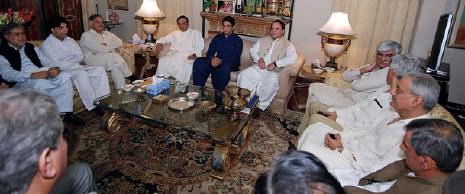
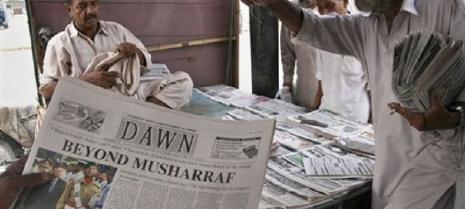
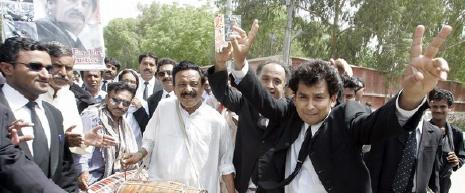
As the political leadership of the country continues its deliberations four questions in particular seem critical. The answers they come up will will impact what happens to Pakistan politics as well as what happens to Pakistan’s political leadership itself.
On each of the following four key decision points, what do you think will happen? What do you think should happen?

Question #1. Who will replace Gen. Pervez Musharraf as President of Pakistan?
The names being thrown around, some I think less seriously than others, include those of Afsaryab Khattak, Afsandyar Wali Khan, Fazlur Rahman, Dr Fehmida Mirza, Aftab Shaaban Mirani, Faryal Talpur, Attaullah Mengal, Saeeduz Zaman Siddiqui, Mehmood Achakzai, Aitizaz Ahsan, Rana Bhagwandas, Fakharuddin Ibrahim, and many others. As important as the choice of the President is the signal it will send about whether the nature and powers of the President will also be cut down or not. What do you think will happen? What do you think should happen?
Question #2. Will Chief Justice Iftikhar Chaudhry and his fellow judges be restored? And when?
The really important question here is the “when”. PML(N) wants the judges to be restored immediately. If they are not, what signal will this send to the PML(N) and the country about their role and power within the ruling coalition? What, really, are the pros and cons of an early restoration, and for whom? The one question that may be even more important than the “when” question here, is the “under what conditions” question. That is the question one hears less about but will may ultimately determine what comes, or does not come, out of the judges moevement. What do you think will happen? What do you think should happen?
Question #3. What is the future of the ruling coalition itself?
The ruling coalition was really constructed as a coalition against Gen. Musharraf. Its primary purpose was to remove Gen. Musharraf from office. It has been spectacularly successful in doing that. What now? Will it survive? In what form? Should it survive at all? Will it be more healthy if PML(N) now becomes a parliamentary opposition which, in a functioning democracy, is as important as a government? What do you think will happen? What do you think should happen?
Question #4. What about the survival issues of the Pakistani awam: Bijli, Paani, Nokri, Naan?
Ultimately, this is the most important question of all. Till now, with a visibly divided government, the political parties could ward of part of the economic woes faced by ordinary Pakistanis to Gen. Musharraf and his past policies. Now, they will have to – and quickly – demonstrate that they can and will do something about these major crises. It is not clear what they plan to, or even can, do. But if they don’t their popularity will be seriously imperiled. What do you think will happen? What do you think should happen?




Let me tell you why “Pakistani” is a RAW agent. Because he is just busted my cover I am a RAW agent also.
Just kidding I dont have time for that :)
Yaar demagh istimal kar because you sound pathetic and at the same time I feel sorry for you.
You should be a politician and join PPP because I love your style of writing and patriotic BS.
Anyways I don’t need to spend time on you ..you are a lost cause.
One thing baffles me how come if the educated masses supported Musharaf .??? No One held rally’s in support of him??? Begharti ki haad hai…support him or at least open a website dedicated to him. I would build one if I knew how to.
I also thik that GEO TV had a big role in maligning Musharaf..I am cancelling GEO TV subscription. Also how come they are not holding these current elected Morons to the test????
I see a BIAS here and some ulterior motive!!!
from Lida ( a RAW agent who got busted by a true 100%Pakistani)
Question 1
It does not really matter if a Chimpanzie replaces Musharraf. With a little bit of training, even a chimpenzie can be a skillful rubber stamp.
Question 2
It does not matter if the Justice is restored or not.For the people on street, justice will be as Utopian as ever before.
Question 3
Again it does not matter as to what would be the future of the coalition. One comes, other goes. Trespassers cannot make a difference, and they never do.
Question 4
Bijli,Paani,Nokri,Naan… soon to be found only in museums. !
Change of names and faces won’t make a difference.These trespasser are none the least concerned about whatever the heaven or hell happens to people. Soon, coalition boogies will be up against each other’s throats. With a change of faces, the history is back to square one. Another martial law or coup wont be a big surprise .
I am musharraf supporter no matter what but as I live in USA not sure about Miss Siddique ? whats happening with her ? Why Musharraf is blamed for her and so on please educate me on her?
I have a question, what is the grown prince (Bilawal Bhutto Zardari) is doing there? If 19 year old kids have to decide about judge and president then we Pakistanis have no hope. Good luck democracy.
1. It is hard to predict for new President as strong powers remains with President, both PML(N) and PPP would like to get hold of it. Surely, all coalition partners will find it hard to agree on one name.
2. Cheif Justice has been so politicised that he can no longer act as a neutral Judge (even if he wants to). His every verdict will be looked as biased. He has become more like a politician now (with his direct speeches in public and issuing statements to the media).
3. Coalition partners will move into opposite directions soon as there is nothing else that can bind them together.
4. Awam will still have to live the way they are. Rather they should get ready for tougher times.