Adil Najam
I am most pleasantly surprised that readers have so quickly figured out the mystery man in our latest ATP Quiz. Since they have, let me add a little more information and let the discussion continue.
I am not sure, however, how many readers know of Muhammad Asad or of his connection to Pakistan. Let me confess that until fairly recently I did not; at least not of the Pakistan connection. As I have gotten to know more about this connection, I have gotten more and more intrigued – all the more so because there is relatively little in his own writings or that of others about this.
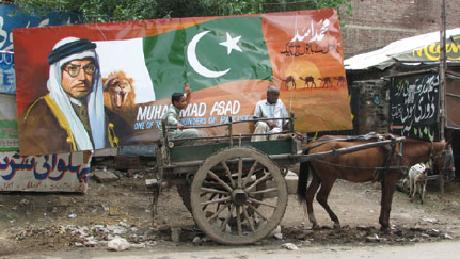
But lets start from the beginning.

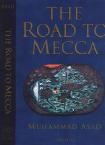 Asad was born in 1900 as Leopold Weiss to Jewish parents in Lvov (then part of the Habsburg Empire, now in Ukraine). He moved to Berlin in 1920 to become a journalist and traveled to Palestine in 1922. It was there that he first came into contact with Arabs and Muslims and began a long journey into Muslim lands and minds that eventually led to his embracing Islam in 1926. His bestselling autobiography Road to Mecca (published 1954) recounts these years in vivid and captivating detail., including his adventures in Arabia and in working with King Ibn Saud and the Grand Sanusi, amongst others.
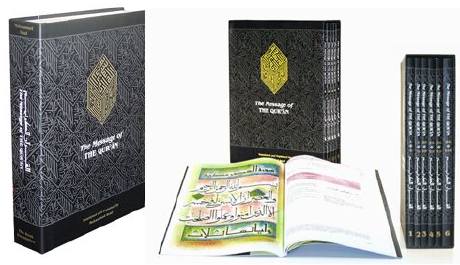
Later in his life, after retiring in Spain, he spent 17 years working on an English translation of the Quran which was first published in 1980. Many consider this to be one of the finest English translation of the Quran – some argue this is because he himself was fluent in bedouin Arabic which is closest to the Arabic in the Quran, others suggest that since he was himself a European and wrote in more understandable idiomatic English his translation is most accessible to non-Arabic speakers.
As a lay-reader who ver the years has read a number of English translations, including his, I do find Asad’s translation – The Message of the Quran – to be easier to read than those by Abdullah Yusuf Ali or Marmaduke Pickthall which are amore formal and literal translations. Unlike the translations by Prof. Ahmed Ali (my particular favorite) and by Thomas Cleary which are also in contemporary idiom and very readable, the Mohammad Asad translation has the added virtue of also having commentary and explanations, and the new edition is wonderfully presented, printed in the highest quality, and with tasteful calligraphy. All in all, Mohammad Asad’s The Message of the Quran is the translation that I now recommend to friends, Muslims as well as non-Muslims.
But I digress. Much as I like Muhammad Asad’s translation of the Quran and especially in its new printing, that is not the subject of this post. The subject of the post is his ‘Pakistani connection’ and also why we do not find much about that connection in his writings. Here is what we know.
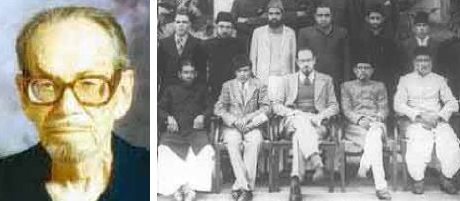
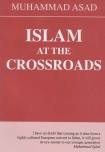
By the early 1930s Asad had gotten rather disenchanted by King Ibn Saud and his religious advisors (see Road to Mecca) and had begun travelling Eastwards into other Muslim lands. This brought him to British India and there he met and became a good friend of Dr. Mohammad Iqbal. Indeed, Iqbal encouraged him to write his book Islam at the Crossroads (published 1934); whose cover has the following testimonial from Iqbal:
“I have no doubt that coming as it does from a highly cultured European convert to Islam, it will prove an eye-opener to our younger generation.” Muhammad Iqbal.
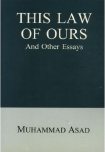
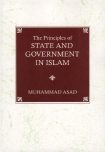

During World War II imprisoned him in a camp for enemy aliens (because of his Austrian nationality) while his father was interned by the Nazis because he was Jewish. After the War he fervently threw his all behind the demand for Pakistan. Upon the creation of Pakistan, he saw himself very much a ‘Pakistani’ as did those he worked with (reportedly even took to wearing the achkan). In 1947 he became the director of the Department of Islamic Reconstruction in West Pakistan and worked on a treatise with ideas for the Constitution of Pakistan. Many of these ideas (which were mostly related to creating a multi-party parliamentary democracy) were reproduced in his later books but he was not very successful in getting them implemented.
 In 1949 Asad joined the Pakistan Foreign Ministry as head of the Middle East Division and eventually in 1952 came to New York as Pakistan’s representative to the United Nations. Here he met the woman who would become the last of his wifes (Pola Hamida). Whether it was the fact that he married her and divorced his earlier wife or the messiness of Pakistani politics, it was in this period that he fell out with the powers in Pakistan and resigned from the Foreign Ministry. He decided to stay on in New York to write Road to Mecca, which became a major success. He never really returned to Pakistan (although, supposedly, Gen. Zia ul Haq tried to get him back) and died in Europe in 1992.
It was his estrangement with the Pakistan government that pushed him back into writing and produced two amazing works – Road to Mecca and The Message of the Quran. However, here once again is a story of one who wished to give his all to Pakistan and we did not let him.




Salam alaikum,
I read Asad’s “Road to Mecca” and highly recommend it to others. The name of Asad’s first wife was Elsa (she reverted to Islam) along with her son, from her first marriage.
Below I have pasted another quote from Mohammad Asad.
“And, finally, by claiming (again, without any warrant in Qur’ãn or Sunnah) that the shari’ah imposes on us the duty to discriminate [non-Muslims], they make it impossible for [the non-Muslims] to bear with equanimity the thought that the country in which they live might become an Islamic state.”
Salamalikum,
I agree with PatExpat. Clearly, Moulana Mohammad Asad doesn’t fit the mold of personalities published at ATP. Dr. Najam is not correct in drawing the conclusion that somehow he was disillusioned by King ibn Saud and his “religious advisors”. He was disillusioned not in the sense of today’s modernist are “disillusioned” by Islamic scholars.
Before people start saying that he propagated ijtihad, it should be known that he was warning against taqleed (blind following) because he followed the methodology of ahl-e-hadith/wahabi (whatever name you want to give). He wasn’t asking for reinterpreting the Quran to satisfy one’s own nafs or bring Islam with the norms of today, as many today want and would lead us to believe.
I’m glad PatExpat posted that essay on Moulana Asad. Many say that established Islamic laws aren’t compatible with today. However, Moulana Asad, the person brought and raised in a more “civilized” society seems to disagree!! I think Moulana Asad also exposes the way of thinking of some of the foremost leaders of Pakistan movement, Jinnah, et el. Jinnah and the rest of the leadership is dead and leaves behind mixed messages, so I don’t want to pass a judgment. But, looking at what they had to say, especially Jinnah, it’s clear that he was just like any other politician who talked from both sides of his mouth. Talking to masses, he talked something more closer to religion while clearly he wasn’t sold on the idea of Pakistan being a theology. This type of talk duped many. That’s why so many people of opposite opinions bring Jinnah’s quotes as evidence to support their opinions. Also, I won’t be surprised if Moulana Asad was forced resign for obvious reasons.
[quote post=”660″]Whether it was the fact that he married her and divorced his earlier wife [/quote]
As far as I know, he married only once before he married Paula Hameeda. And, the first wife reverted to Islam with him, but died soon after they reached Makkah, SubhanAllah walHamdulillah. May Allah grant Jannah to both of his wives and him.
Akbar,
Thanks for your in depth explanation. But its not a matter of Mawdudi islam or Iqbal’s islam. What he was trying to say that in the end Pakistan should be an islamic state.
Apologies for the following very large quote from his aforementioned essay
[quote post=”660″]We want, through Pakistan, to make Islam a reality in our lives. We want Pakistan in order that every one of us should be able to live a truly Islamic life in the widest sense of the word. And it is admittedly impossible for an individual to live in accordance with the scheme propounded by God’s Apostle unless the whole society consciously conforms to it and makes the Law of Islam the law of the land. But this kind of Pakistan will never materialize unless we postulate the Law of Islam not merely as an ideal for a vaguely defined future but as the basis, wherever possible, of all our social and personal behavior at this very hour and minute.
There is [on the other hand] a definite, though perhaps involuntary, tendency on the part of many of our leaders to ignore the spiritual, Islamic background of our struggle and to justify the Muslims’ demand for freedom by stressing their unfortunate experiences with the Hindu majority, as well as to base the Muslims’ claim to being a separate nation on the differences between their and the Hindus’ social usage and cultural expressions.
In short, there is a mounting inclination to consider the fact – for a fact it is – of a separate Muslim nationhood in the conventional, western sense of the word ‘nation’ instead of considering it in the Islamic sense of ummah or millah? Why should we hesitate to proclaim, loudly and without fear, that our being a nation has nothing to do with the conventional meaning of this word: that we are a nation not merely because our habits, customs and cultural expressions are different from those of the other groups inhabiting the country, but because we mean to shape our life in accordance with a particular ideal of our own?
It cannot be often enough repeated that our adherence to the teachings of Islam is the only justification of our communal existence. We are not a racial entity. We are – in spite of the great progress of Urdu as the language of Muslim India – not even a linguistic entity within the strict meaning of this term[/quote]
So in essence he was driving home the point that we are presently fighting tooth and nail to render false propoganda or indoctrination of our over-zealour rulers
Thanks Akbar sahib. Correlation between Asad and Iqbal is hardly surprising. Iqbal channeled his philosophical thoughts in Europe – influences of Nietzche and Goethe are vivid in his concept of “khudee” and “mard-e-momin.”
The lesson we draw from these great people is the need for Muslims to cultivate a culture of reasoning and critical self-examination.
Thanks once again for the comments.
Hi again – I believe Mr Akbar A. might have given me the answer to my earlier question – thank you.
(Also, I hope my question/suggestion above didn’t appear snotty – I hate how cyber-talk fails to communicate tone).
Good article and good follow up discussion!