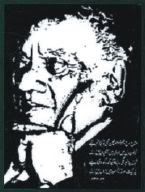
 The Mard-e-Momin as a form of national identity is overrated. So is the concept of the collective morality and the religious honor that gets everyone keyed up, ready to take up arms against an aggressor. The biggest aggressor, after all, remains poverty, bread within. Real tyranny is that which the state practices against its own citizenry, mostly by ignoring them.
Enough with the heroic machismo, I say. It hasn’t bought Pakistan any bread or butter, although it has surely strung us into becoming a state famous world over for its radicalism.
Zard Patto Ka Bann Jo Mera Dess Hai. Faiz Ahmed Faiz (1911-1984) brews in his poetry a gentle reminder of a wilting nation, he calls each of the forgotten, by their own name: the weary armed mother who can’t calm her crying child at night, the postmen, the clerk, the railway driver and the factory worker. These form the majority of our nation – they also form a group that we don’t like to talk about. Our ‘national poet’ Allama Mohammad Iqbal for instance has no mention of these no-name people. Neither does he mention shame, which is what a realistic self-introspection deserves. How can we talk of a national poetry without the people who form its working class?
Nisar teri gallion mey aye Watan, Key koi na saar utha key chaley. Faiz has asked for a soul check, a delving into what brings real honor to the country: protection of the rights of its citizens, a level playing field and recourse to justice. As a member of the International Labor Organization he was astute about the rights of the blue collar workers. His concept of patriotism wasn’t a jingoistic one. Evident in his piece mourning the death of the founding father Mohammad Ali Jinnah, he said: “Short-sighted fanaticism and heartless greed are preparing to plunge both the dominions into another suicidal devil-dance and the voice of the common man is getting feebler through exhaustion.”
Faiz’s nationalism focused more on the cultural aspects of what it was to be Pakistani, the art, the music, the folk tradition. In his compartmentalized life, between his work as a writer and his jail sentences, he was also the head of the Ministry of Culture in Islamabad where he established the Lok Virsa museum, chronicling the unique regional art embedded in our nationalism.
Umeed-e-Seher ki baat sunoo. Far from being a pessimist, he believed in the message of hope. Listen, he said to the dawn of the new morn.
What is missing today, especially among our youth is a concept to anchor them in. A cultural identity of what it is to be a Pakistani. Childishly we believe that fighting the other fulfills our need to congregate around a cause. Pakistan is in the search of Bulleh Shah, the Khudi of Iqbal, the voice of Reshma, the Horse and Cattle show, the Polo matches, the fashion shows, the billboards and the TV Serials, no matter how variant the spectrum, each contributant to the creativity form a mosaic of multiculturalism forms a piece of the modern Pakistan we have today. Anyone with a green passport can claim it as their own.
In the same eulogy Faiz adds that Pakistanis should, “complete the task that the Quaid-i-Azam began, the task of building a free, progressive and secure Pakistan, to restore our people the dignity and happiness for which the Quaid-i-Azam strove, to equip them with all the virtues that the nobility of freedom demands and to rid them of fear, suffering and want that have dogged their lives through the ages.”
The Pakistani cultural identity is infused with religious sentiment. It is important to divorce those two concepts because we have not one but many religious avenues which describe what it is to be a Pakistani, and these avenues cannot be excluded, because Pakistan was not created out of an exclusionary identity. Pakistan was formed for a minority community, through a democratic and constitutional process; it must therefore amongst all its principles uphold the protection of the underdog as its highest moral principle.
Tum yey Kehtey ho vo Jang ho bhi chuki, Jiss mey rakha nahi hey kissi ney kadaam. Vehemently anti-war, Faiz cautioned against those wars that were fought on the behalf of an unseen force, and lost at the cost of many lives and much blood. His focus instead was on educating the youth. As principal of a local school, he introduced at first education for women, brought enrollment to an all time high and instituted excellence at this school. His versatility as a nation builder was evident in the devotion with which he completed each assigned task, no matter what the field.
Bahar Aaee. Above all else, Faiz brought alive that Pakistan which bloomed endlessly, even after loss.




I agree with Adil Najam that the reference to Iqbal was unnecessary and a distraction. Specially since it was not explored and seems to have been thrown in only as a provacation.
Thank you Anwer for those poems. Shows just how misguided the extremists on both sides of this unnecessary debate are.
Actually, I will be very glad to see a good discussion on many of the issues you raise. Specially on the zakat drama; actually zakat chori. If it had worked, we would have solved the poverty problem ages ago. It obviously does not!
Sheer disappointment:
ATP would publish ANYTHING in praise of Faiz, even if it is a misrepresentation of historical facts and disrespects or demeans those personalities who form Pakistani Nationalism. More than anything, this post looks like a collection of views around a cigar-smoking poker table in Karachi Gymkhana or a reportage of English Literary Circle’s meeting of at-least-2000cc-scholars.
Perhaps one thing ATP does not realise is that a large number of ATP readers are non-Pakistanis. What message or image do they have from a blog claiming “ALL THINGS PAKISTANI” but publishing controversial remarks about the stature of Iqbal an undisputed national figure for Pakistan (and ironically but truthfully for Iran). Remarks igniting a debate between nationalist vs. secular factions do not serve any purpose other than to escalate the friction and widen the gap between 80% and 20% of Pakistan.
Perhaps ATP is following the business tactics of media groups to generate and expand readership/viewer-ship, i.e. controversial debates on every second post.
The scholarly posts on ATP give only the viewpoint of secular elite of Pakistan. The middle or lower-middle or lower class of Pakistan is represented just as a part of the culture, i.e. caps, turbines, cricket, trains, roads, foods, truck art, etc.. During recent floods all the momentum was for rescue and relief. Did we discuss the lives of affectees before the flood and after they are rehabilitated?
With this post (and others like questioning the animal slaughtering on Eid-ul-Azha) on credit, I would not be surprised if ATP publishes other controversial posts:
Why was Pakistan created?
Why Mr. Jinnah accepted to be Quaid-e-Azam?
Why do we need nuclear arsenal when USA guarantees against aggression from India and Israel?
Why to pay Zakat when there are several other taxes meant to be spent on the poor?
Cant we be satisfied with whatever part of Kashmir we have? (An excerpt from Prof. Najam’s view on Kashmir for Pakistan is on http://bit.ly/a2U4ro)
اقبال – باغی مرید
ہم کو تو میسر نہیں مٹی کا دیا بھی
گھر پیر کا بجلی کے چراغوں سے ہے روشن
شہری ہو، دہاتی ہو، مسلمان ہے سادہ
مانند بتاں پجتے ہیں کعبے کے برہمن
نذرانہ نہیں ، سود ہے پیران حرم کا
ہر خرقۂ سالوس کے اندر ہے مہاجن
میراث میں آئی ہے انھیں مسند ارشاد
زاغوں کے تصرف میں عقابوں کے نشیمن
اقبال : فیض احمد فیض
آیا ہمارے دیس میں اک خوش نوا فقیر
آیا اور اپنی دھن میں غزلخواں گزر گیا
سنسان راہیں خلق سے آباد ہو گئیں
ویران میکدوں کا نصیبہ سنور گیا
تھیں چند ہی نگاہیں جو اس تک پہنچ سکیں
پر اس کاگیت سب کے دلوں میں اتر گیا
اب دور جا چکا ہے وہ شاہِ گدا نما
اور پھر سے اپنے دیس کی راہیں اداس ہیں
چند اک کو یاد ہے کوئی اس کی ادائے خاص
وہ اک نگاہیں چند عزیزوں کے پاس ہیں
پر اُس کا گیت سب کے دلوں میں مقیم ہے
اور اس کی لَے سے سینکڑوں لذت شناس ہیں
اس گیت کے تمام محاسن ہیں لازوال
اس کا وفور اس کا خروش، اس کا سوزوساز
یہ گیت مثلِ شعلۂ جوالہ تند و تیز
اس کی لپک سے بادِ فنا کا جگر گداز
جیسے چراغ وحشتِ صر صر سے بے خطر
یا شمع بزم صبح کی آمد سے بے خبر