Adil Najam
Much has happened in Pakistan over the last many weeks. Too much.
Amidst all the chaos and tragedy it has become difficult to keep track of just all that is happening, let alone make sense of it. It is clear that the dust has not settled yet. Far from it one can be sure that more turmoil and uncertainty is in the offing.
Yet, this we know. Gen. Musharraf sits firm in control; for now. A major national leader has been assassinated; and whether the elections are held or what might happen in them remains shrouded in doubt and speculation. The assault on the nation by extremists and terrorists have intensified. And the economy is taking a spin for the ordinary Pakistan. Despair is thick in the air and neither the military government, nor the political parties, nor the market forces seem to generate broad confidence or enthusiasm.
Adding to the despair is the fact that the two institutions of society that had begun to assert themselves and generate public support and confidence have been clipped violently. The media has been told what its “place” is and what can happen to its profits if it steps out of line. The judiciary has been revamped and the message sent out to newcomers to “learn” from the fate of their predecessors. These are classic authoritarian tactics: Increase the pressure, demonstrate the pain you can inflict, and highlight the fact that you are willing to inflict the pain if needed.
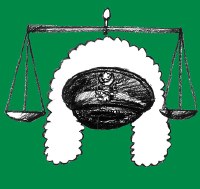 Whatever one might think of the quality of the media before the clampdown or about the individual quality and character of individual judges is irrelevant to the fact that the descent of blatant authoritarian excess cannot but be bad for the country in both the short- and the long-term. Violence has a tendency to destroy not only those upon whom violence is inflict but also those who inflict violence. The las many weeks have not only weakened the institutions of the judiciary and the press, it has also – and, maybe, more so – damaged (further) the credibility of the military as an institution and of those in government.
These much more blatant authoritarian tactics have, indeed, allowed Gen. Musharraf to maintain his hold in power. The cost, however, is that to prolong his stay in power he will now find himself compelled to be ever more blatant and obvious in the use of such tactics. Ultimately, and this we know from history in Pakistan and elsewhere, either his ability to apply ever-more stringent pressure or the people’s ability to withstand it will give way and the house of cards will implode.
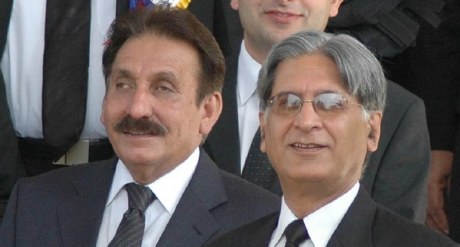
In the short term, however, one of the impacts of the turmoil and despair that has resulted, especially, from Benazir Bhutto’s assassination is that some news has suddenly gone off our radars. This is not a matter of conspiracy. It is a matter of “despair overload.” But the result is striking. The sentiment for an end of authoritarianism has not extinguished, but the fledgling movement for the restoration for the judiciary and media has been silenced; or, at least, quietened. One has been hearing less and less about Chief Justice Iftikhar Chaudhry or about Chaudhry Aitizaz Ahsan and given the fickleness of public attention and support one fears that the government might be succeeding in its attempts to have them fade away from the public imagination.
The cynics can say that this is because the supporters have themselves become silent, the support rallies have fizzled, the flowers are no longer going to the judges, and that the courts and the media are themselves now functioning again and the emergency has been lifted. All of this is true but none of this is conclusive.
It is quite clear, in fact, that Gen. Musharraf considers these two Chaudhries – Iftikhar and Aitizaz – to be the biggest threat to his power. Here is how:
Even though the exiled leaders Nawaz Sharif and Benazir Bhutto (now assassinated) have been allowed back into the country, even though the emergency has been lifted, even though the media curbs have been lifted, even though Gen. Musharraf has given up his uniform… despite all of this and more, the government is still not confident enough in their own power to release Iftikhar Chaudhry and Aitizaz Ahsan from detention. Everything else the General can manage. But these two Chaudhries are seen as having enough public support and credibility to be seen to be a threat to the General’s rule if allowed out in the open.
This is an extremely telling fact. It demonstrates who the military government thinks they can “manage” and who are considered to be “unmanageable.” The urge felt by the military government to suppress the voice of the two Chaudhries demonstrates how seriously the military government takes these two and the potential support they could muster.
It is interesting to ponder upon why the government would be more threatened by these two than by the mainstream political parties. It is not because these two are super-heroes. They are not. Both are flawed as all of us are. The threat they embody comes from the fact that, unlike the political parties, they have become spearheads (maybe reluctant spearheads) for a nascent movement whose goal is not as much to get a “share of the power” as it is to just see a real “restoration of democracy” and an “end to military rule.” Certainly Iftikhar Chaudhry did not set out to achieve this goal. He was for quite a while quite happy with how things were. Aitizaz Ahsan also did not set out to launch such a movement. But over the last half-year or more, the followers who have gathered around them have thrust this mission on them. It is a mission they now seem to embrace; or at least not shun. It is the nature of this goal that makes accommodation with them much more difficult for the government than with those who, in fact, want to be accommodated. This is exactly why it is important for the government to “control” these two much more than all others.
The unfortunate fact is that on this issue the government’s tactics may be working. Public interest is fickle. Public memory is short. And the overdose of other calamities is strong. Between all of this, the public attention is, and maybe has, been diverted elsewhere. One is reminded of the sheyr:
Reh gaya Mushtaq dil meiN rang-e-yaad-raftagaaN
Phool mehngay ho gaye, qubraiN purani ho gaeeN
Even if one does not agree with or like these two Chaudhries, it would be sad if, in fact, this is the case. The movement they embody is no longer about them. They are quite incidental to it. The movement and the moment that they came to symbolize was a movement and moment for civil society’s desire for democracy. In an environment where every institution of society was collapsing, they seemed to suggest that the democratic spirit – with its most idealistic aspirations – was still alive in Pakistan. The squashing of a judge and a lawyer is bad, but it is not catastrophic in societal terms. However, the squashing of a nation’s democratic spirit is monumental calamity. One fears that what we are seeing here is an attempt to do the latter much more than the former.





Musharaff is ruling because he has the support of ARMY and its generals. He had the audacity to travel abroad because he knew he has the full bakcing of the military. Blaming musharaff without blaming his POWER centre shows the ignorance of people.
Why he considers iftichar choudhry and Ahsan as more dangerious? It means it is the army and ISI which considers them dangerous. Why? Why an independent judiciary and bar is dangerous to the army? If the young of Pakistan do not understand this, they will never learn. If after feb 18, you think the leader elected will have independence to rule, then you all are mistaken.
Benazir was killed for this very same reason. she overstepped the brief set by the POWER CENTRE because she started believing in ordinary people of Pakistan. She was given the lesson.Democracy is not such an easy meat, that you will get without sacrifice.
Tis is how the dictator now suggests remedies for journalists to a public forum.
@Meengla,
your response to P.M Alvi left me perplexed,
there is not much difference between Feudals,
Ummayyads, PPP, Chaudries since Mughals,
Pakistan’s present Politics
and your opinion ,
no wonder why your response ended up with
‘ Animal Farm ‘ !!!!
@Pervez Munir Alvi,
I disagree. I think it is wrong to paint every move by any player in Pakistan (or elsewhere) in a crass ‘power’ struggle. If that is the philosophical foundation then, logically, even the rise of Islam 1400 years ago and all other ‘revolutions’ or evolution in history were quest for power.
Now, ‘power’ is sought and acquired but ‘power’ is the power which also keeps a society from total anarchy. When we human decide to live in an organized society then we always submit to the rules of ‘power’. We could opt-out and live in wildnerness and be ‘free’ but so-long as we choose to enjoy the benefits of organized societies the society, through its elected/unelected power wielders make us submit its will.
The hounarable Chowdries, especially Aitzaz Ahsan, have proved that they want a more fair representation of power to direct the Pakistani populace.
There will ALWAYS be someone who will dictate rules for the larger population. It might as well be a group of educated, proven people to do so. This ‘going from village to village’ is a fairytale: The Talibans too went from village to village and they too were very modest and were from ‘amongst the people’. That power may have corrupted them should not be a surprise. And so, in case of Pakistan too, the door-to-door reformers will one day become ‘more equal than others’. I suggest reading the ‘Animal Farm’ if one has not already done so!
I don’t agree with Iftikhar and Aitzaz being involved “incidentally.” The chief justice landed himself into trouble with Musharraf precisely because of the fact that he refused to give in to him; he took the military and the establishment on in many arenas: missing people, privatization, etc, etc.
Plus, Iftikhar could have followed past examples and settled for healthy compensation instead…but he did not, he took Busharraf head on—at a time when no one anticipated the movement that came about…remember, we were all shocked at how the whole of Pakistan (well, save some people who cant be mentioned on this site apparently) joined in.
As for Aitzaz, that man has been fighting for the judiciary his entire life! Just read his Indus Saga book and you will be reminded time and again of a very, very strong sense of justice.
So, I disagree. Aitzaz and Iftikhar’s involvement wasn’t incidental—it was causative.